Life in Grief

Another day. Today I took another load home from Mom’s apartment. Relatively non-emotional things, like household cleaner and a garbage can. Finding a home for each new thing in our house often proves too much for me, however, and the bags line our hallway until I or someone else in our family has the energy to put things away.

It’s chaotic. It’s different. Those who said me moving back home now that Mom has died would be a returning to normal couldn’t have been farther from reality. It’s not normal. Nothing is normal. Our old life is in the past, and things have changed. We’re still caught in the ripple effects of Mom’s death, like a pebble being churned up by the incoming waves of the ocean over and over and over. None of us have settled. Every rhythm we had is gone, and life is too unpredictable to create many new rhythms yet.

It breaks my heart that I cannot be who I want to be. Last night, my daughter was perky and bright-eyed, eager to talk to me about what was going on in her world. I, however, was spent. Grief sucks the energy from you better than a full family of four children. I had lost all capacity to listen or be present with her, and I had to look her in the eye and say, “Honey, I’m so sorry, I want to listen to you, but I can’t. I don’t have anything left. I need some down time where I’m not doing anything.” And she nodded, didn’t appear to be hurt, and went downstairs. My spirit wanted to listen to her, and my flesh was weak and couldn’t. I’m more limited than I was before Mom was sick. My sweet kids run into these limits every day, and it breaks my heart afresh each time I can’t be the mom I want to be.

I don’t know how to answer, “How are you?”. There are no good responses that are both honest and respectful to the unwitting person who just stepped on the landmine of my broken heart, or the well-intentioned individual who doesn’t know what to do with a grieving person. It’s a terrible place to be put, actually. I don’t want to be asked how I am, and I do. I don’t want to be around people, and I do. Another example of not knowing which end is up. Like C.S. Lewis said in A Grief Observed, if only I could be around people and have them not talk to me. I dread being alone, as the feelings soar in to be my constant companion, yet I don’t have the energy to engage in conversation. Sometimes I can barely finish a sentence, and often the words get jumbled. Part of the brain fog of grief.

The weight of grief is real. It sucks the life out of you. I rarely have the energy to move. I do things because I know they are good for me, but even then, I have limits. Yet if people look at me from the outside, I seem fine. If only grief could be observed outwardly. If I wore a cast and limped, people would obviously understand my limits and I wouldn’t be faced with explaining why I can’t do such-and-such a thing, or refraining from explaining, and living with that weight of not being understood. If they could look inside me, they would see the carnage and perhaps leave me be. My body feels like it’s betrayed my mind. They are interconnected, yet out of sync with each other. Not to mention my soul. I can’t tell which end is up.

At times I am enjoying my beautiful family. Then while I’m doing so, out of the blue with no warning comes a feeling of complete disconnect from them. They are laughing at something beautiful or funny, and in that onrush of disconnect, I feel as if I cannot relate to them at all. My heart is reminded that it is broken, and that life is dangerous. Life hurts, and these beautiful moments can turn to ugly and painful ones at the drop of a hat. No warning, no asking you for permission. At times, if I dwell on it, the fact that beautiful can turn to ugly on a dime scares me deeply. I shrink from living, and yet I don’t want to shrink. I know it’s better to love than not to love, but the other side of love is loss and terrible pain. No one can love without also experiencing the loss of someone you love deeply. And part of me still wants to avoid that type of wrenching. Of separation.

I never really related with Christians who said the worst part of Jesus’ time on the cross (and beforehand as well) was his separation from his father. The bloody torture and slow suffocation seemed worse to me. Then all of a sudden, driving home from another tap class today, when Mom wasn’t there, and I couldn’t talk with her in the parking lot like we usually would, it hit me. This separation from Mom because of her death is the most painful thing I have experienced in my life thus far. It hurts more than I ever believed possible. There are days I don’t feel like I can go on, and days I don’t want to. Death isn’t natural. Death isn’t God’s good design. Death is ripping, searing pain. It’s separating you from someone you love, and this side of heaven, there is no cure. There is no removal of that sting. It’s very much present. And anyone who has not yet had a loved one ripped from their lives does not understand this yet. But they will.

I digress. As I realized this separation from Mom hurts so much because I love her, I also realized that Jesus knows how I feel. Experientially. He lost his father. He was separated from God. He knows not just the separation of a child from a parent, but the ripping, searing pain of losing God. He cried out in the midst of it, “My God, my God, why have you forsaken me?” from Psalm 22. He knows. That does not make my pain any less. That does not make this grief ease. That does not make me smile and say, like so many Christians seem to think I need to say, “It’s all right. God is good.” It frees me to cry out in my anguish to God, too. It frees me to grieve. It brings my heart awe that I am not alone. That Jesus would be willing to suffer a greater pain than I’ll ever know.

I can’t fathom things being more painful than they are now, except when I consider losing my husband or kids. Now I live in the understanding that such a dreaded event could actually happen. The blinders that I deserve a long marriage, that I deserve to watch my kids grow up, that I should be able to see grandchildren, that I am somehow “due” these things just because I am alive, are gone. That’s all been stripped away. No where did God promise any of those things. No where did he say I am due these things. I have fooled myself in believing that I do. I have listened to other voices besides his. I am not promised a horror-free life. I am promised a painful one. With Jesus with me through all of it. Each valley, each mountaintop. At least I never have to lose God’s presence. It is a remarkable thing that we know his presence most closely in the darkest of times.

It’s scary to be this honest. I feel like I’m going crazy, and if I were to share, that others would confirm my loss of sanity. Listening to C.S. Lewis today helped me realize that this is not insanity, but deep grief. And when we put words to it, it helps others know they are not alone. Today I felt a deep connection to someone who died when my mom was three years old. We have never met, yet his honesty through his journey of losing his wife to cancer has already deeply helped me. Go figure. I wonder if either of us would trade the lessons learned and the help given for our loved one back. I don’t know. One of the many questions without answers that have been coming to mind.

The Reflection No One Wants

I’m writing this post with tears in my eyes. It’s 8 weeks this Thursday since Mom died. Life is still a whirlwind of grief, emotions, shock, pain, numbness, peace, laughter and agony. There is no normal for me or my family as of yet. So many things to do, so many things to feel, so many limitations. I’ll save “how I am” for a separate post, but to speak quickly to it, I am exhausted, hurting and grieving.

The focus for me after Mom’s funeral has been 1. to get on top her financial situation as her executor, and 2. empty out her apartment by the middle of July, when her lease is up. I knew I could have put all her belongings in storage and put it off, but I preferred to attack it now and get it done, with much help from some amazing friends. Thankfully, it’s almost done. There’s a whole other post in the “how I am” about what it’s been like to do such a horrible job at such a horrible time. For now, this time in her apartment, with her things, her smell, her journals, everything she left behind, has forced me to continue grieving. I understand why people put this task off after a loved one’s death, sometimes for years. It’s indescribably hard.

As I’ve been going through this the last 6 weeks, I’ve also been able to attend church again. I have not been attending since Mom’s surgery, save for a couple weeks when I had respite from caregiving. Both my husband and I were very involved in serving at our church, but since Mom got sick, we stepped out of our roles in order to care for her and our family. Ever since I have come back to Sunday mornings, things are different. I am different. I am no longer playing piano, teaching, leading a class, or serving in any capacity. I am just there. It’s quite a shift for me. And every Sunday, without fail so far, Sunday mornings are by far the time I cry the most during the week. While I have lots of memories of Mom in that building, it’s not just her memories that bring the tears. It’s being in the presence of God with other people who know and love him, too. It stirs my heart in a very different way than my times with God at home. Outward evidence, perhaps, of the fact that Christians are saved into a family. We were not meant to be alone. Thank you to my Jesus family for the hugs, the prayers, the tears cried with me, the ways you have loved me and helped carry me.

This uncontrollable crying on Sundays has made me very uncomfortable. I often feel like the only one who’s using up 6 tissues each week. Being told to stand and greet each other just adds to the awkwardness, as I don’t mind being honest about why I’m a blubbering mess, but there is no good way to be present with someone in a grieving state in one minute or less. We are told to come as we are, however, and I am coming as I am. Broken-hearted. I am not bringing my gifts to the church. I’m bringing my grief and sorrow.

While I know that’s okay, and it’s exactly what God wants me to do, it’s not normal for our church culture. I am very aware of standing out, and not just because I’m outwardly crying. Hurting people who prefer to privately grieve, or express it in different ways than copious tears, are also present on Sundays. And it begs the question:

What do we do with our grief as the church?

Maybe it’s not the pain losing a loved one. It could be disappointment over a lost opportunity, life not going the way it should have gone, unwanted singleness, the wayward child, chronic pain. Fill in the blank. At some point, all of us have tasted the twisted nature of life. Things are not as they should be, and when that happens, it hurts. What do we do when it hurts?

I am not the one to write a book on this subject. I’m busy reading them, because I was never taught well what to do with my grief. Thanks to friends who have been walking through this longer than I have, I am reading and using resources like Dark Waters, Deep Mercy by Mark Vroegop, Walking with God Through Pain and Suffering by Tim Keller, A Sacred Sorrow by Michael Card, and a four-part series on loss of a loved one by Kenneth C. Haugk. I’m looking to join a Grief Share group in the fall to pursue it further. But I ask this question about what we do with our grief as the church because right now, we don’t know how to deal with it well.

Christian radio teaches me to always be positive. Quote those Bible verses, find the silver lining in your situation, sing minor key lyrics in a major key (one of my biggest pet peeves as a musician), and just remember how good God is! Even when your daughter has died, or your mom has incurable cancer, keep up the positive outlook. Since we know the end of the story, and everything will be okay, there’s no room for your grief.

Church teaches me that grief is a place of limbo. There really is no landing place for a person in grief. As a leader, I am welcome back when I am functional. When I can serve again. The implied messages are: “You’re welcome to come, but you can’t really do anything useful for us until you can teach a class again, or serve on the worship team, or teach in kids’ ministry. Let us know when you’re done grieving.” It’s as if we don’t know what to do with deeply hurting people. Give them space. Where is their space? I say this, fully acknowledging that I have believed this and done this, in my ignorance and to my great sorrow.

Yet God is showing me through my walk with sorrow, that broken-hearted people are vital for the church. In fact, in my friend’s (and I will always think of him as my pastor), Buzz’s sermon on Psalm 13 last week, one of the things I realized is that me coming with only my grief is exactly what God has for me to do. That’s my service. That’s my contribution in this season. Why, you may ask? How does me coming with sorrow and tears serve or help anyone?

It images God.

Yes, that’s right. Our sorrow at the brokenness, twisted nature of creation, at death and decay and despair, reflects to the world who God is. It’s the reflection no one wants to show, but everyone desperately needs. Since we all experience this brokenness, we all need to know what on earth to do with it. More than that, we also need to know that God grieves the ruptured state of his creation. In particular does he grieve the lost and shattered state of his people, his image bearers.

Need proof, perhaps? You don’t have to read far in the Bible to see and hear God’s laments. I’ve mentioned John 11 in a previous post, when we see Jesus lamenting the death of his friend, Lazarus. But if we turn back to the Old Testament, it is everywhere. God regrets making man in Genesis. God grieves over his lost people in Exodus. God’s anger and sadness is visible as his people continually turn away from him in Judges. He grieves over Saul’s turning away in 1 Samuel. The prophets are full of his laments. Jesus himself laments over Jerusalem, echoing God’s heart through the years. God has strong emotions, probably stronger than any of us have ever felt. He is sovereign, and he grieves, as a father who hates watching his beloved child choose death over life. It breaks his heart (to borrow our vernacular).

God doesn’t respond to the horrors of sin and death with positivity. I believe it’s impossible for us to fully grasp this, but it’s essential to at least try to understand how he can be fully sovereign over every particle of his creation, using evil to accomplish his purpose, redeem and rescue (and one day restore) all of his creation through Jesus, AND fully grieve over the death of a sparrow. Often we try to understand him, and since his ways are unsearchable (Romans 11), when we reach a conundrum, we put him in a human box. I’ll use Christian radio as an example again. When we get that diagnosis no one wants, when that sweet child dies, when sin’s effect rears its ugly head, Christian radio tells us that all things work together for good. Or the DJ tells us that he/she has peace about the situation. They quote Bible verses all day long, but they are not verses of lament or sorrow. They are positively spun, Romans 8:28 style, misapplied to the grieving situation. I have yet to hear a K-Love verse of the day about lament, sorrow, or anger. No, God responds to the pain in his people and his creation with passionate emotion.

It’s not only Christian radio. I’ve heard that message from other Christian quarters. We are ill-equipped to handle grief in a God-honoring way. We are ill-educated on how God handles grief of his broken creation. And because of that, when you are thrust into grief or disappointment, you lack tools and a robust theology of God and suffering that help you actually turn to him. You have no place for your questions and doubts, your anger and fear, your anguish and numbness. You wonder if something is wrong with you, if you are not trusting God enough. You hear the positive worship songs and wonder where the songs of lament are. While the Psalms express their doubts, anger, fear, and questions directly to God, we don’t. And that’s deeply damaging to all of us.

We need grieving people in our church. We need to learn from them. We need them to show us what God is like in their grief. We need them to be weak, to question, to doubt, to be angry, to have great sorrow. Because we are, or have been, or will be that grieving person. And we have a God who is deeply acquainted with our grief. He shares it with us. He knows. He grieves, too. When we learn to lament, to bring those feelings and questions and cries to him, it’s the bridge that brings us to him. Without it, we set grieving people floundering. They have no way to reconcile the pain they experience with a God who either seems not to care or couldn’t do anything to stop it. They see him as powerful, but not emotive, or emotive, but not powerful, instead of the truth that God is all-powerful and knows our suffering intimately, and cares deeply enough to suffer himself. They need to know by experience that he draws near to them in their pain. No wonder so many hurting people leave the church. I understand it now. I wish I understood it before.

If you’re not the one currently grieving, you are needed, too. Not just in the ways you are gifted to serve, but with your presence. Along with the one who grieves, you image God when you learn to come alongside the broken-hearted. If he is the one who is near to them, your nearness to the broken-hearted is God’s presence to them.

Obviously not all of the Christian life is sung in a minor key. There are beautiful truths of God’s character in which we rejoice. There are astounding promises in which we trust. There is abundant hope to which we look forward. AND. And there are deep sorrows in which we lament. Imaging God also happens in the deepest valleys, not just the mountaintops.

So my service at present is coming broken. Living in sorrow and with my tears. Not only does my broken heart image God, my lament helps bring me toward him. I cannot thank those of you enough who have drawn near to me in my pain and been God’s presence to me. You help me feel safe when I fall apart on Sunday mornings. You help me draw close to God. Thank you.

Remembering Mom

It’s time to do the harder writing. The processing and grieving and remembering of my mother, Laurie. I’m realizing it will take much time. Perhaps years. Perhaps I will never be done. One day at a time.

The night before her surgery to remove cancer, we had a conversation. She wasn’t speaking by this point, and so it’s a conversation written down on notebook paper. Hindsight I’m really grateful for that, because now I can look at her words and remember. She told me she always wanted a daughter, and was thrilled when she found out I was a girl. Having me in the spring, near her birthday and right before Mother’s Day made it even more special. She would take me on walks through the neighborhood, putting lilacs in my baby carriage. Almost 38 years later, I would take her on wheelchair walks through her neighborhood and pick flowers to give to her. We met in person in a hospital on May 9, 1986, when she gave birth to me. 38 years later, also in a hospital, on May 9, 2024, we said goodbye for now, when she took her last breath. 

I got to live with her for the last 5 months of her life. I hadn’t lived with her since I was a child, and this time, though it was incredibly hard in many ways, was also a huge blessing, and one I am so grateful for. I don’t regret one minute of it, even though my family and I needed to live apart for three of those months. Living with her gave me a window into her heart and life as an adult that I’ve never had before. Often we would have late night conversations with her ridiculous voice to text app. She went with a free one and we got what we paid for! One particularly funny moment was when auto-correct changed the name of her radiation oncologist, someone she didn’t immediately bond with, to Dr. Sunshine. The conversations would range from light to heavy, Enneagram types to the meaning of life. By the way, she was a Two. We bonded over many of the difficulties of the cancer season, though we each had a very different side of the same coin. It was very two-sided, as she would often ask me questions and listen so well, as she was known for doing. 

I saw how brave, strong, fierce, resilient, vulnerable, emotional, broken, and beautiful my mom was those last 5 months. Something I hadn’t seen as a child. She certainly wasn’t perfect. In fact, if she were here, I would guarantee you that she would be uncomfortable with all the praises and assure us that she had faults. She wasn’t afraid to admit the ways she had screwed up, or messed up. In fact, she often could see the broken parts of herself easier than she could the beautiful ones. That humility to be able to admit her weaknesses and failings, to apologize for when she hurt me or someone else, the desire to learn and grow, is one of the things I am most grateful for about her, and one of the things I got to thank her for before she died. I hope she understood how valuable her humility was. She was the one I could be completely honest with, and know I wouldn’t be judged. She would listen, she wouldn’t try to solve a problem or put a bow on a painful situation. She would be there for you when you were ready, and be there with you no matter where you were. One time, as I was sobbing on her lap post-surgery, is when I felt she was most present with me. She just held my hand, and said, “I see you. I see your pain.”

My mom took bullet after bullet in this cancer journey pursuing health and life. I saw her suffer and endure more than I’ve ever seen another human being go through. Even in my cancer caregiver support group, hearing the stories of other loved one’s cancer journeys, while they are all difficult and horrendous in their own way, Mom’s was particularly challenging with the nature of her surgery, the trach, the loss of speech, and the PEG tube. Many other patients had faculties that Mom had lost. We would watch other cancer patients come in for treatment, and Mom would note how many people are dealing with cancer. I would note how many of them could walk in and out, talk to their Drs, eat a meal on their own, etc. Mom was walking to and from treatment for awhile, but in April she lost the energy to do so, and was never able to talk and eat on her own. It was a rough road. Yet I never heard her complain. She would grieve, she would question, she would share how she missed food, and how lonely it was sometimes to have no voice. That’s where our evening conversations were so valuable. Even though it wasn’t something audible, she had a voice, and she still does. Her writings gave many people windows into her heart and life, and we were told multiple times how much people appreciated hearing her perspective.

We knew it was hard. We knew this could go either way. We knew the doctors could only do so much. They gave her odds, but also acknowledged they couldn’t predict how this would go. Each patient is different. They could see patients who looked terrible who would make it, and patients who looked great but then died. We knew we couldn’t figure out the end of the story, but simply walk each day out and find whatever God had planned. Mom knew and acknowledged she could die from this. She was never afraid of it. Often, due to the suffering she was going through, she wished for death. She told me once she had done much in her life, eaten so many varieties of food, raised her kids, lived her life, that she wasn’t sure what else she had to give. Perhaps you, like me, can think of millions of reasons we and the world needed her. She wasn’t so convinced. Again, it was easier for her to see her faults than her strengths. Then the next day I would find her making plans for buying a house, planning to counsel in cancer care support groups, looking at tickets for another concert, finding something else beautiful. Though death looked attractive in ways, she never sought it or gave up on life. She pondered the meaning of her life deeply, and bore the suffering of the last 7 months with incredible strength.

So many things remind me of her. Every time she saw a flower, she would stick her nose in it to inhale any scent it might have. As my sister-in-law says, she had a great taste for “smelly” things. A nose like a bloodhound. Our kids know “Grandma’s smell” because of her perfume or her wall scents. She loved things to match. I remember when I would need to help her dress, that she would insist that everything she wear match, even down to the color scrunchie I would put in her hair. I somehow did not get that gene from her. Which is probably why she’s bought me jewelry, purses, and other accessories I simply wouldn’t buy for myself. She loved beauty, and you could see that as soon as you walked into her home. You may think a dish was just a dish to eat off, but to Mom, it was a piece of artwork to visually enjoy as well. She decorated not only for Christmas, but every season, and would take videos of anything she enjoyed to replay those moments again when she was back home. We would watch BeeGees and Beatles documentaries. Mom seemed fascinated by human stories and biographies. The last one I watched with her was a biography of Bob Ross. Whenever we watched a movie, she would wonder what the actors’ real lives were like and often google them. I remember I introduced her to the TV show Friends in the last 5 months, and she was so saddened when she found out Matthew Perry had passed. Apparently Chandler was her favorite. 

As a child, she was my safe place. She was steady, present, self-sacrificing, giving what she had to her children. I could always count on her. She fostered my love of words and reading. As I was going through her apartment, I found my library card from Rochester, MN public library. She saved it. Something I used so often that the image is burned in my brain. One of my favorite memories as a young child was when I got my toy kitchen. I felt so proud, cooking my little meal in the family room when Mom was cooking her meal 20 feet away from me in the kitchen. Even at that point, I wanted to be like her. She was my teacher, my example. Whenever I wanted to bake something, she would encourage me to. I’m sure I made a mess, as children do in the kitchen, but I don’t remember her saying no. I remember her telling me to go ahead and try. 

Sometimes we clashed. I didn’t understand parts of her. She would be willing to try things, sometimes to a fault, and I was more cautious and a rule-follower. While I love beautiful things, I am a minimalist, and my mom seemed never to be satisfied with a little. I saw inconsistencies and didn’t know what to do with them. It was hard to grow up, as I felt my mom wanting to hold onto me longer than I needed. Yet this is also something she recognized later on, and when I brought it up to her as an adult, she owned it and apologized. In her last 6 months, she saw the excess in her life and was eager to simplify, making plans but never having the opportunity to do so. Again, she set the example for how to parent: not perfectly, but humbly. 

I will never be able to say enough about my mom, and what a precious person she is. I only offer one perspective on the woman who was Laurie, and I know each of you who knew her have a piece of who she was. There is no replacing her. Every day I will miss her love for others, empathy, compassion, fire for life, humility, snarky faces, love for beauty, hugs, a listening ear, her beautiful hair, cheering on the Packers together, goofy voices reading to our kids. I never got to take her back to Hawaii like we were planning. I never got to take her to a Lambeau football game. We never got to take another tap class together. We never made it to the tulip festival this year. There were so many things I wanted to talk with her about as a grown woman. She won’t get to see her grandkids grow up. She won’t come to our house to decorate Christmas cookies and have a nerf gun fight. I can’t send her flowers and see that look on her face when she smells something so good. I can’t text her pictures of my kids or the next beautiful thing I saw. I can’t walk with her, hold her hand, ask how she is doing. She died so young, and none of us were ready to say goodbye. There was so much more life to share together. 

As the pain many of us feel is so deep, Mom would be the first person to acknowledge it and sit with us in it. She wouldn’t rob us of that precious time we need to grieve. She wouldn’t encourage us to put a smile on because she’s no longer suffering. She would sit with us, hold our hand, let us cry, and tell us, “I see you. I see your pain.” She knew not everyone could sit in the uncomfortable space of pain without trying to put a positive spin on it. But she could, and if she were here, she would want to do that with each of you. So here I am, encouraging us to lean into our grief. In honor of Laurie. It’s okay that we’re hurting. Sit with that. Mom knew the way out was through, and she bravely faced all the feelings and all the darkness that came her way. Yes, her suffering is done. Praise God. I believe with all my heart she is with her dear Jesus, the one who is acquainted with our grief. That’s wonderful. However, we’re not there. We’re still suffering. It’s okay that it hurts right now. I hope and pray we can walk through our pain so bravely like Mom did, and someday to see and experience the light she knows now. 

Week 2

There’s a reason people in our culture avoid grief. Many reasons, I believe. If I had to sum it up like I would to my four-year-old, it’s because we don’t want to hurt. We want to be comfortable. Now, I know it’s not that simple. It’s a many-faceted, cultural, societal, belief-oriented question: why do we as a culture seem not to know how to grieve well?

Examples of this: 3 days of bereavement leave from most employers. Lots of bows put on hard or horribly painful situations. Not knowing what to do when someone is hurt (because we haven’t been taught. It hasn’t been modeled. It’s not part of our culture). Being told to grieve in private. Don’t show it. Strength being seen as pushing the tears back and staying composed.

I strongly disagree. The more I walk out through this grief, the more clearly I am seeing. Strength is not pushing down the pain but facing it. Feeling it. All of it. Without numbing or shifting or distracting from it. It takes an incredibly strong person to feel the brokenness of this world. Many people don’t have any good reason to do this. Other than, perhaps, being told it’s good for us. Like spinach or exercise or being selfless: things we know we should do because they’re good but sometimes we don’t feel like doing it. If we don’t let the pain out, it only hurts us and others more, right?

At the end of the day, we all believe something about life and its meaning, and it shapes how we live, deal with pain, make our choices. You’ve probably gathered by now I hold a Christian perspective, but since there are so many people who use that label who are nothing like Jesus, I need to define what I mean. That’s what I will do about grief from my belief system as a Christian.

The more I walk this horribly broken road with Jesus, the more I can tell you he doesn’t push us away from pain. He doesn’t tell us to stuff it. He has continually been inviting me INTO it. He isn’t giving me religious platitudes. He isn’t telling me to stop crying because Mom is ok and out of pain. He’s drawing me into feeling just a touch of the brokenness of the world in this grief. And he’s in it with me. It’s beyond my understanding how he can grieve with me for my mom’s death while hanging out with her in paradise. Yet he does. It boggles me that he counts my tears, keeps track of them. If they’re in jars, I must be filling up a lot. Yet he is.

Why? Why invite me/us into pain? What’s the point? What is the freakin’ point? I have still spent most of my life trying to avoid pain. Someday, I hope, that statistic will turn around where I will have spent more leaning into pain than running from it. I’m not there yet. Anyway, back to why?

I don’t know. I’m not God. I don’t understand it all. One thing I do understand is that since my Savior walked this broken road of suffering, since he became intimately acquainted with our grief, since he feels and knows our sorrows, and by doing so, brought about the rescue of all rescues, then I can trust him. I can trust he will bring beauty from ashes; life from death; strength from weakness. It’s what he does. Everything upside down, the weak things to shame the strong.

So yes, it may look weak to our culture to fall apart when your loved one dies. It may look “un-Christian” to grieve. But it is not. It takes immense strength, and follows in the path of Jesus himself.

One song I’ve heard at Christian funerals now bothers me to no end, because it encourages this “stuff the tears”, harmful mentality. One line goes, “When I go, don’t cry for me. In my Savior’s arms I’ll be.” Couldn’t be further from what Jesus would say. Though it’s true, if this person loved and followed Jesus, that they are with him, you think he also doesn’t grieve over the death, the horror, the evil that has leeched onto his perfect creation and twisted it? You don’t think that doesn’t break his heart? To see the people he loves more than we’ll ever understand suffer? It’s hard for our human brains to comprehend both sides of his greatness and his emotions, but we need to understand that he will both bring life from death AND weep because of the darkness. Like I’ve written about before, Lazarus’ death and resurrection is a great example of this to us. There are so many examples of God’s strong emotions in the OT. And guess who brought out many of his emotions.

As I close for now, I’m realizing one area of growth for me in this whole valley. It seems to be growing in Christlike-ness in both my ability to trust he is working to turn the horrible into beautiful when I don’t see it, AND to weep, mourn and feel the pain of the brokenness more fully. To lament like Jesus. Because in order to share in his glory, we must also share in his suffering.

God help me. I’m so weak. I need your strength to fall apart. To feel instead of to numb. To be broken so that you may heal. To mourn so that I may be comforted. I know my tears and pain are not the end. But if I don’t enter the pain, I’ll miss the reward. I want your comfort. I want your presence. I want to walk the road you walked. The one strewn with grief and sorrow. It’s worth it. You’re worth it.

Fighting to Grieve

The only way is through. I know stuffing my feelings will end up hurting me and others. I know dismissing them, minimizing them, rationalizing them, or platituding them (I just coined that word. You’re welcome) will do the same. The only way is through them. So here I go. Just like how Mom suffered through every day, not knowing when the end date was. Just like how she would have encouraged me to think about what I am feeling and thinking, not to be led by my feelings to but acknowledge them fully, experience them, learn from them and grow through them. Now my blog will be a place where I continue processing this journey and this dark grief and shocking heartbreak.

The first step for me is fighting against the hurtful statements and advice coming my way. I’m caught in a tug-of-war. Expected on my part, after the last 7 months. There are those who help and those who hurt, and all mean well. In order for me to enter my grief, I need to name and fight against the tide that pulls me away from my feelings.

The unhelpful and hurtful statements:

  • “At least you got to say goodbye. Some people don’t get to do that.”
  • “At least she knew Jesus.”
  • “At least her suffering is over.”
  • Bible verses texted at a distance.
  • “I know just how you feel. My mom/sister/loved one went through ……….”
  • “Happy birthday, Melissa.”
  • Advice/telling me what I should do.

Helpful and healing actions and words:

  • Presence without words.
  • Listening without fixing or saying anything beyond “I’m so sorry.”
  • Flying into town just to sit with me.
  • Acknowledging how deep the grief is. Period. No bow on top.
  • Coming to the hospital and being willing to cry and feel pain alongside me.
  • Praying for me.
  • Avoiding platitudes, words of comfort, and just letting me be where I am.
  • Offering help to bear the legal load of executor (I have this support already).
  • Reminding me how difficult this road is and that I need to take care of myself. Drink water, sleep, distract yourself at times. Very helpful.
  • Instead of wishing me a happy birthday or happy Mother’s day, owning how painful and heavy these days are.

I’m listing these not to condemn anyone, as I know the unhelpful and hurtful statements come from a place of caring and wanting to help. I’m listing these to help me grow. To remind me of what is true and what is false. To identify why the hurtful statements hurt. They often end up robbing me of the privilege and necessary path of grieving and feeling this pain to its full extent. They often minimize, steal, dismiss, rationalize, or platitude away the grief. Mom and I both experienced this before she died, and we talked about it at length. We understood not everyone is in a place where they are able or comfortable to sit with deep pain or wrestling through suffering. I love the people who are giving me these statements, AND I am going to stand up strong against the lies the statements give me, so that I can obey God and grieve well and fully, as he would want me to. So here I go. I’m standing up against the lies these unhelpful statements have given me. I am going to fight to grieve well.

At least you got to say goodbye. Some people don’t get to do that.” Yes, even though I got to say goodbye to my Mom, it doesn’t make the pain of losing her at such a young age any less painful or horrific.

“At least she knew Jesus.” Even though she is with Jesus, and part of me rejoices with that, right now my tears are my food day and night because of losing her, of her grandkids not getting to know her, of missing seeing her every day and talking with her, listening to her and having her listen to me, enjoying flowers and beautiful things, dancing with her…and I could go on for pages. My heart feels like there is a hole in it that will not go away. I know I will grow around my grief. I know it won’t always hurt so badly. Right now my eyes are swollen, my head aches, and the grief is strong. Let me be here.

“At least her suffering is over.” Yes, her suffering is over. Praise Jesus. Mine is deepening. I watched her suffocate to death. I watched her struggle and suffer over the last 7 months, as cancer took over her body. I’m already physically spent from caring for her, and emotionally tired. Now I have lost her, when I was hoping for at least 20 more years of sharing life with her. On top of which we live in a society that does not allow time to grieve well. I’m her executor, and the legal list of duties is long and the last thing I feel like doing.

Bible verses texted at a distance. I love the Bible. I teach the Bible. I am a firm believer in reading God’s word, memorizing it, living off it. Yet throwing Bible verses at a suffering person feels like throwing a brick at your heart during open heart surgery. From chapter 4 of Someone I Know is Grieving by Ed Welch, he says, “When Scripture is offered without compassion, and with the assurance that you know what the grieving person needs to hear, it hurts.” Later on in the same chapter, he says, “Times of mourning are not when we encourage someone to look on the bright side and give thanks and praise to God. Indeed, Proverbs argues the opposite: ‘Whoever sings songs to a heavy heart is like one who takes off a garment on a cold day’ (Proverbs 25:20). Grief is a time to lament with the sufferer, and the psalms of lament can guide us.” I would post the whole chapter here if I could. Read Ed Welch’s book if you are aware that you need to grow in compassion and humility to walk with suffering, grieving, hurting people.

“I know just how you feel. My mom/sister/loved one went through ……….” You know how you feel about losing your mom/loved one. You don’t know how I feel about losing mine. Saying you do diminishes my experience. You were not with her like I was. You were not in that hospital room with me. Even my brothers and sisters-in-law, who were there and who have the same mother or mother-in-law, have different relationships with her and different stories, and thusly we will have different grief experiences from each other. You are acquainted with the grief of losing a parent, but you are not acquainted with mine. Each of our stories is so different and unique. Don’t pretend they’re the same. Listening to mine without inserting yours would be so much more helpful.

“Happy birthday, Melissa.” My mom died on my 38th birthday. Now I have no idea how on earth to celebrate the day I was born and mark the day she died. You’ve probably gathered by now that I don’t want advice on how to do that, either. And every few years, my birthday falls on Mother’s Day. The triad and complexity of having the day my mom gave birth to me, with the day she died while we held her hand, on the day we celebrate and honor mothers, is beyond me. I did not have a happy birthday. I do not know how to have a happy birthday. I am not having a happy Mother’s Day. Please do not wish me one. As my brother Ryan, said, we were shattered into a million pieces. Period. No secondary comfort this year. Just overwhelming grief. And that is okay with me. There is a time to weep, and now is it.

Advice/telling me what I should do. Advice comes in many forms. Some is true and helpful, some is true and unhelpful, some is out in left field and easiest to dismiss. The advice I’m choosing to dismiss is left field advice and the true and unhelpful. When given from a distance, from someone who is not close to me and has not helped share my grief, it adds a load. It implies I’m doing the wrong thing. It feels like this person cares just enough to yell down into the pit, “There’s a ladder to your left! Just climb up and you’ll be fine!” instead of climbing down into the pit, crying with me, holding me, being with me, binding up my wounds, before gently guiding me to the ladder when I’m ready. Advice from those in the pit with me is so very welcome and exactly what I need.

If you are someone who has unintentionally hurt me through those unhelpful statements, you need to know that I love you. I’m not mad or upset. I’m hurting. I recommend Ed Welch’s book mentioned above as a start, but I warn you: it will take a lot of personal work to actually grow in compassion and humility to walk with someone who is grieving. It’s an easy read; it’s not an easy thing to actually change and do. If you were to see how this is an area where you are in need of growth, however, and you want to change, the effort of doing so would be such an act of love for the suffering people in your life.

I have so many things to say, so many things to process. so many things to feel. Weirdly I didn’t expect this first post after Mom died to be one like this. I don’t understand. But I’m going with it. In the next few weeks, I hope to dive more into chronicling her last few days, sharing who she was, remembering our last 5 months together, good memories, what I am missing in not having her here, or whatever else comes up. If reading it is a blessing to you, I’m grateful. As I’ve said before, I don’t expect anyone to. It’s a personal journey, and you’re welcome on it if you want to come along.

The only way is through.

What Normal Looks Like Today

It’s closing in on 5 months since Mom’s surgery and my role as active caregiver. It’s 6 months of a heavy new load. It’s 3 months of me living apart from my family and seeing my kids and husband only occasionally. There have been different parts to this journey so far, and I have no idea what’s to come, but it helps to write through the process. Perhaps, one day, looking back, I will see a pattern. I will see God at work. I will see growth. I will see movement. Or maybe I won’t see anything. Regardless of what I see or understand, it’s one of those days where I need to write what I’m experiencing.

Mom is at a low point. She is feeling the full effects of chemo and radiation, though both are officially done. So she’s in recovery, but other than not going to treatment, it feels very similar. The low point includes continued nausea, incredibly low energy, secretions and suctioning (last night it was about 5 times. I’m still in my jammies at 3:16pm), needing supervision walking to the bathroom, help getting up, help showering, help dressing. She’s on 2 LPM of continuous oxygen. It’s a struggle to get her feet up with her difficulty breathing and her nausea, so we’re constantly fighting lower leg edema. Her back, upper and lower, are in continual pain due to sitting in a chair day and night. I often put on essential oils to help, use a heating pad, and massage her multiple times a day. Her interactions are very minimal and brief. She doesn’t have much energy beyond existing. I wash dishes/syringes at least twice a day. I put on her radiation creams 3x/day. Feeding and meds happen all through her PEG tube, so I am shooting something in her every 2-4 hours throughout a 24hr period. I am not able to leave her alone, save for quick trips to the mailbox or to pick up something a gracious friend dropped off. Lately I have been able to step outside for walks, as long as I stay within 2-5 minutes of the apartment. I call our kids a few times a week, and my husband about the same amount of time. Often we get cut off because Mom needs something. I re-order oxygen, trach supplies, and food, trying to keep a good inventory of each. Laundry is a relaxing chore, as there’s not much with the two of us. Lots of rags to sop up spills from feeding or to absorb secretions. I order dinner through DoorDash, and rate the dashers who are able to actually get it to the apartment door without calling me with 5 stars. Her suction device needs cleaning once/day, along with changing her trach collar, cannula, gauze, etc. Three times a week we are going to the hospital for 2 hour hydration appointments, and follow-ups with her medical oncologist. This outing takes a lot of coordination. I need to pack up a bag with syringes, cups, water, rags, gloves, medi-mat, meds, sometimes food depending on the timing, so I can give her her meds/food while she’s hooked up to hydration. Then I need to pack up her suction machine and supplies, get a new oxygen tank hooked up, switch her to portable oxygen, get her in the wheelchair, lock up the apartment, and head over. Even though it’s a lot of work, I love seeing the nurses and staff at oncology. They are the highlight of the visits every time. On top of this load there is the load of being Mom’s voice. Lots of legal forms, Social Security, insurance, scheduling, phone calls, faxes, working to advocate as best I can.

It’s the heaviest load I have ever felt. I am carrying Mom while she can’t carry herself. I know I can’t keep this up long-term. Physically alone, it’s draining. I barely get time to think about how I’m doing emotionally. Once last week I went for a walk, and started crying as soon as I got outside. It took the rest of my walk to figure out why I was crying and to work through those feelings. Thankfully, I did. Wasn’t what I was expecting, but it was probably what I needed.

Friends pick up prescriptions for me, groceries, library books, whatever I need that I can’t go out and do myself. Amazon has become such a help with getting supplies to us. I wish I could tell everyone what their help means to me. There’s a whole host of people helping my husband and kids while he’s single-parenting, trying to work and be the steady adult for them while I’m gone. Oh, it was heart-rending to hear my four-year-old on the phone ask when Mommy is coming home, and hearing him try to work out how much longer he has to wait. My heart aches to see my babies and hold them again. I think the first year after I return home will be lots of cuddling.

We’re told this down season will last 2-4 more weeks, and then Mom may suddenly perk up with lots more energy. It’s not a linear improvement; it’s often a quick and sudden change. I have respite coming this Sunday, then another possible one in later May. It’s also possible Mom could move in with our family in June, once we don’t have to be at the hospital so often. I’m honestly not sure if that will be the best way to go, as I don’t know what her therapy schedule and recovery schedule will look like. Perhaps she’ll be with us for awhile until she builds up her strength; perhaps we will hire a caregiver for that recovery time so she could stay here. It’s too far away to tell, and I won’t waste unnecessary energy thinking about something I can’t deal with yet. There’s enough trouble for one day right in front of me.

I wish I had the energy to call my friends more. Whenever I get a spare moment, I usually use it for things like a shower, lying down, eating, exercise, or calling my hubby and kiddos. I wish I had more time but I don’t. I hate feeling like I’m being a bad friend, and yet I know this is where I am and I can only be where I am. Thankfully I’m seeing my good friends shine out like gold. They get it, they’re not asking anything of me, and they’re here for me no matter what I have capacity for. One of the things I have been realizing is that hard times really reveal who your friends are. Who show up for you, check in on you, extend so much grace and love, don’t give up on you. You end up becoming closer through the difficulty. I am thankful for Erica, for Jena, and for Gail. It may not seem like much, but you three in particular have encouraged me to no end, just by being there. I am also thankful for the army holding us up in all the various ways you do. I saw from my caregiver support group today that what I’m going through, even in the cancer caregiver realm, is an incredibly heavy load. Hence the need for all the support from others.

I’m guessing in a month, our “normal” will look a bit different. I hope so. Hope is something that keeps me going when I don’t want to wash one more syringe, or when I’m sick and tired of the repetitive tasks, or when I see Mom so beat down. There is hope that it won’t be like this forever. There is hope, not that life goes back to normal, but that God will use such a heavy time to do something good. Most of my hope lands in the eternal category, as I’m realizing that putting my hope in temporary things is simply foolish, like storing my good chocolate bars outside in the sun. This really can’t go on forever. At some point, good will win over evil. At some point there is relief. There is rest and glory waiting. One with no more pain, no more tears, no more suffering. And angels and an entire host of suffering saints are watching and, I hope, cheering us on to not give up. To keep going one more day. I know I would regret hitting the escape button on a fire God intended. If he puts me through it, it’s for a reason. I want the reward from the trial. And the only way to get there is through. Like the cross.

Is there a year retreat available after this season is done, where I can do my emotional processing of this whole ordeal, cry whenever I need to, rest and sleep, enjoy something beautiful, and reconnect with my family? I doubt it; it’s just what my heart wants. If you know of one, call me.

Tears

It’s another night.

Not sure when it’s gonna stop.

Day after night after day.

Same things to keep her alive, yet there’s change.

Never a day the same.

No idea when it will end.

It’s a battle; it’s a war. Like nothing I’ve felt before

Hideous coupled with beauty.

Can I do one moment more?

Help me, Jesus. I feel so frail.

Some days I can take on the world; some days there’s no strength.

What can I do? Will you fail

To supply me, protect me and provide

How much longer, Jesus?

You know. You prayed. You cried. You ached.

Til the tears became blood. You asked

Is there another way?

I want out, God. Please. And you breathed.

Then you waved the white flag.

Surrender. Release. Not my will but yours be the one

That is done here. I give up my way

To do it Your way.

Whatever it takes. Whatever it costs. It’s your day.

Then He sent angels. He gave you the strength

To be horribly broken. And to lose him.

Now because of you I choose

To trust the one who’s sending me angels

Rides, medications, food

Prayers, money, presence and O2

You name it, we got it

All because of you.

Now I don’t get it

Never would have asked for it

I hate it, miss my babies, my cat,

Miss my husband, miss all that I had

But this blessing in curses is worth it

Because I follow you in your service

Taking on the cross for a purpose

You loved me enough to bleed

What else can I do but receive and give that kind of love

To the people around me in need?

It’s not easy, it’s not a comfort thing.

No, it costs you everything

Yet you give and you get

More than you ever could know or expect

The treasure in hell

Is seeing the curse lose its power

Reversed. Doing God’s will instead of destruction

And twisted wreckage becomes blessings.

It’s not about me. Not comfort, not God aiming to please me

It’s greater than that. He’s aiming for glory.

Far above what I see. Joy and wonder.

He’s for me.

He’s with me through fire, through flood, through hurricane.

Though my bones may be snapped

Though my brain is one step from insane.

He’s holding me up, weeping, counting the tears.

Sees every hurt caused by indifference

Advice, and well-meaning ignorance.

He gets it. He’s there. Our Savior suffered

Still does. With us.

I can’t hold on. So he does. For me.

So one day I will see him in glory.

The tears water something greater. Touch something higher.

It’s like we’re walking through fire.

Burning all false desire.

Making me in his image. Painful? Yes. But it’s worth it.

Won’t ever deserve it.

Because you went first, and you’re with me

I’ll do it.

Sustain this shell of your daughter

While I’m held by my Father.

Give me faith to endure it

And believe that it’s worth it.

Family

Some day I hope I can find more humor in the day-to-day. It came to me more naturally before 11/20, and now it’s a lot harder. In this week off, I have gotten a lot more family time, which tends to be an avenue for laughter. One experience being with my three boys in the pool Saturday. Jonathan was throwing a plastic ball to Caleb, but missed and amazingly hit me straight on the top of the head while I was doing my water-running. I have no idea what it looked like, but it was a one in a million shot. Titus saw the entire thing and burst into that best kind of belly laughter coming from a four-year-old. There’s nothing like it. No filter, pure hilariousness. It took him at least three minutes to stop.

Today I’m feeling more emotions at the surface. Respite is ending tonight. I’ll be getting ready to move back in with Mom for the undetermined future. This week has been such a gift. I love it, and my heart feels like it’s being wrenched out of my body again. It breaks when I think about leaving my family. I miss giving Titus kisses in the morning, and “eating his neck” just to hear him giggle. He’s been clinging to me a lot while I’ve been home. Greg snagged tickets to Kung Fu Panda 4 Saturday afternoon, and Titus skipped his seat and snuggled right in next to me and used me as a pillow for two hours. That’s when it started to hurt. Grace and Caleb have been so responsible, taking ownership of the cat and their schoolwork and helping their little brother. Each time I see them, I see so much growth. They tell me they are sad when I leave, and it’s harder for them to verbalize it. Jonathan is more contemplative, and he internalizes a lot of his questions. Then when we spend time together, they come out. He and Caleb ask the most about Grandma’s treatment. He plays well with Titus and is his buddy through the day, reading books to him, and is the one Titus asks to snuggle with the most. He’s my caring, aware-of-people’s-feelings one.

I see so many ways they’ve grown without me there. It’s been encouraging to see, that even while my heart breaks missing them, they are maturing and doing well overall. A good reminder for me that while they need me as their mother, they are also getting their needs met through other means. They’re learning. They’re developing in their character. They are getting the chance to step up. The double-edged sword of grief. Good coming out of bad.

I love my family. I love them very much. It is one of the hardest things to drive away, not knowing when I will get to see them again. We don’t have an end date on the calendar with cancer. We have benchmarks, but no idea when they will happen. Right now, the goal is to get to the end of treatment (currently April 23), then Mom needs time to rebuild her strength. So I leave my family to care for my mother in what feels like the fight of her life.

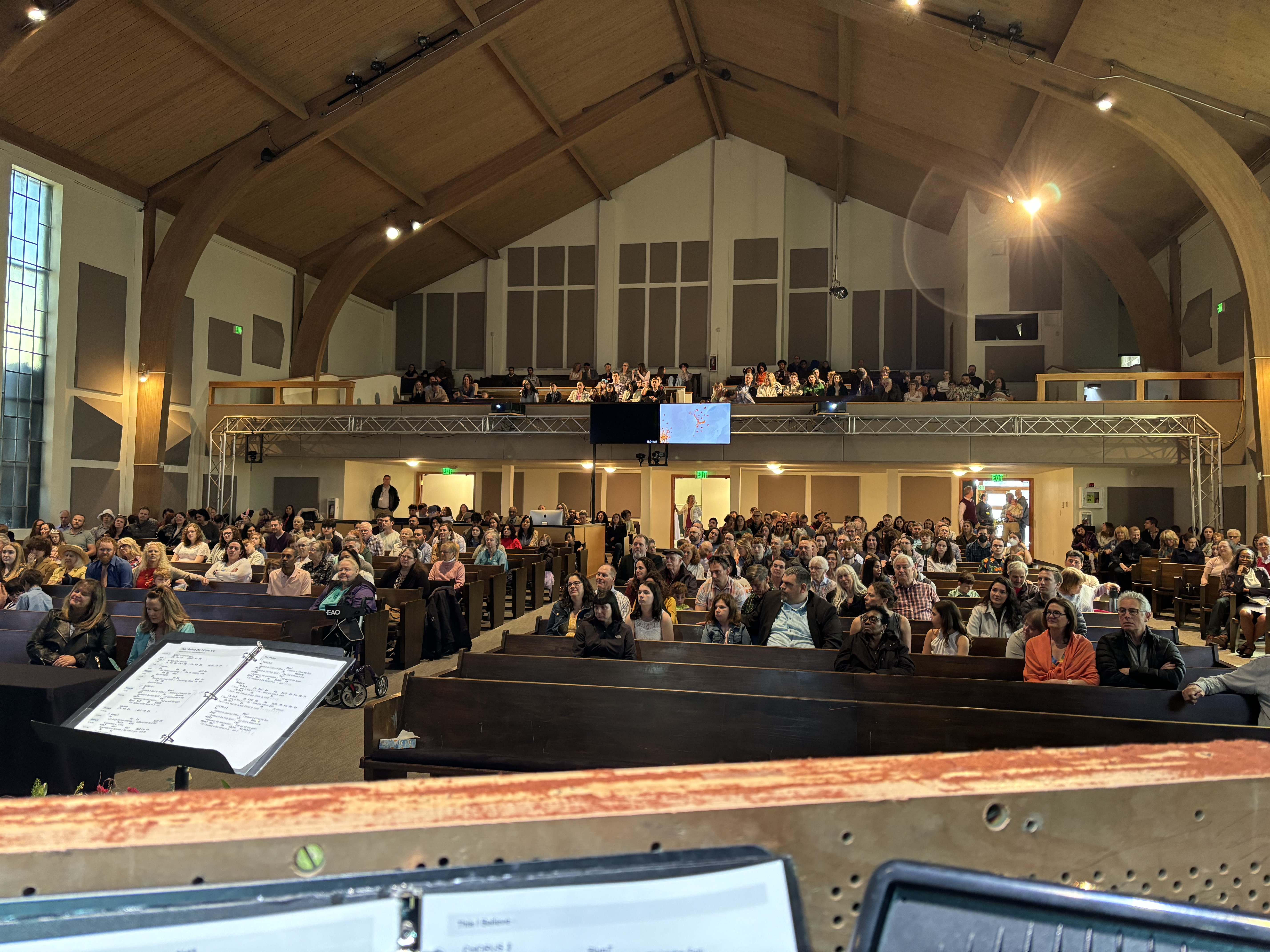
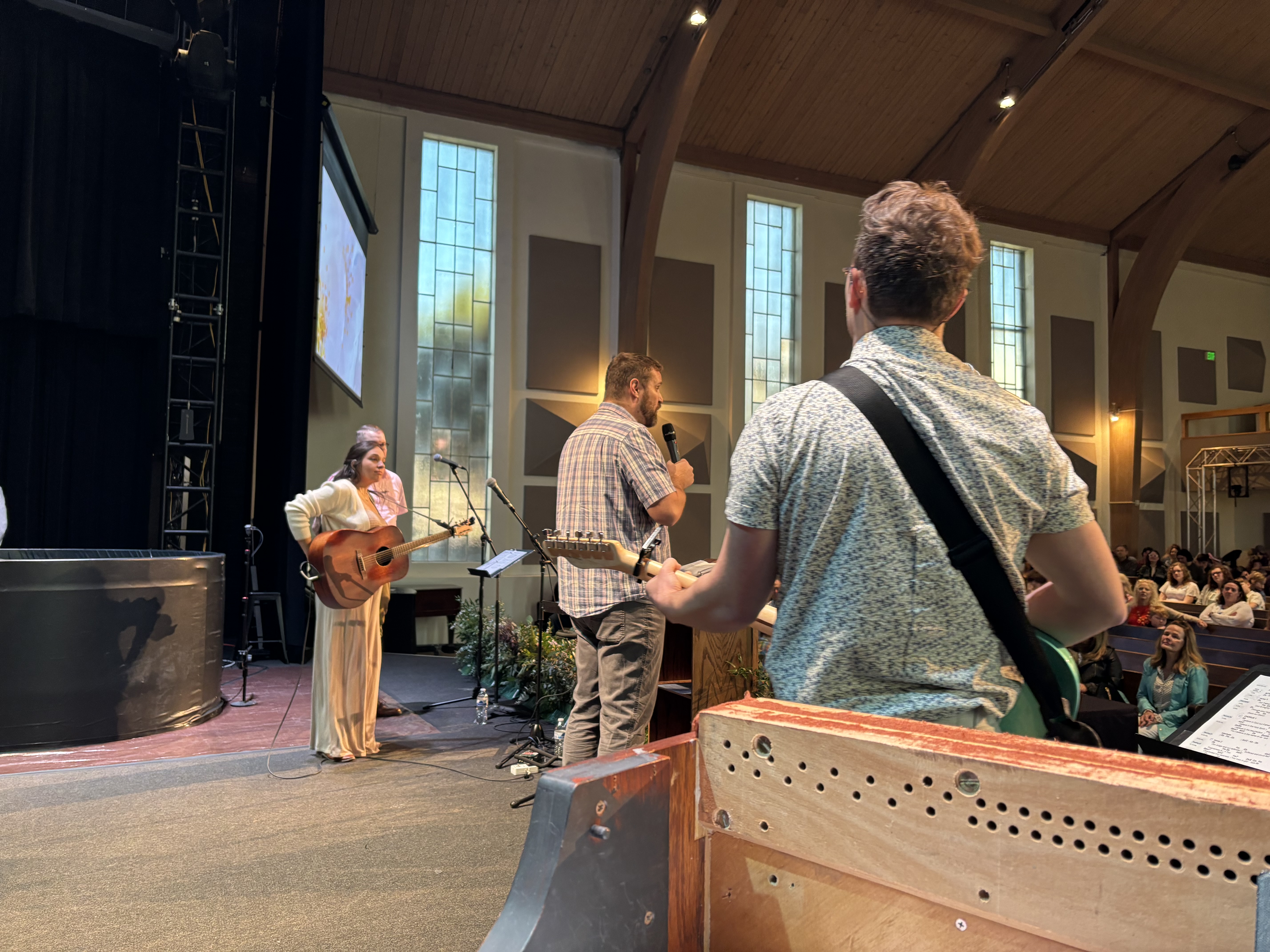
Something hit me on Easter Sunday, involving family and some other things. I got to play in our Easter worship band, something I love doing and didn’t think I would have the capacity for this year, but thanks to Mom’s friend, I did. Many people just opened their arms and welcomed me back. Some shared the load by hugging me, feeling some of the pain with me. Some asked where I’ve been. The tears started coming when one of my pastors came up to the piano, put his arm around my shoulder and asked, “Would it help if I do a Costco run for you? I can even bring it to Issaquah.” Until that point, I had seen our church family as mainly ones who can support Greg, because he’s closer to them than I am, and he’s single parenting and working and overwhelmed daily. That simple ask helped me see how isolated I have felt in Issaquah, and how I didn’t need to be isolated. I can still ask for help. Another sweet friend offered to drive up just to visit sometime with her new baby. I was reminded that day that I’m not alone. I’m not forgotten. There are people who want to help take care of me, too.

My highlight of the day came while playing one of the songs in our set. We were a group of people, gathered together, many worshiping Jesus, and in that moment, I felt this awareness of being with family. It was a glimpse into the eternal. It was a moment where the curtain was drawn back, and I saw a preview of what’s to come. I saw that this is what we’re waiting for. Some day, the entire family of God will be together, spanning time and nation, praising Jesus. No more will we be distracted or weighed down by other things. No more will we suffer. In particular, no more will we think marriage, sex, relationships, family, career, accomplishments, image, money, or anything else is ultimate. No more will our hearts play this tug-of-war. What we rehearsed on Sunday was a small picture of the reality coming. It hit me hard.

You see, while I love my family dearly, they’re only temporary. They’re not the real deal. They’re a picture of what God’s family is and will be. While I love marriage and sex, they’re also temporary. They’re a picture of the real deal, the relationship between Jesus and his church. While I love relationships, people aren’t the ones whose approval I need most. I could keep going, but perhaps that’s redundant. Tim Keller says that one of the things suffering does is reveal our idols. If we’re responsive to the fire, I believe suffering can be the tool which burns them away. This is one of the kindnesses I’ve seen in my current fire. God has shown me that nothing I have and could cling to will give me total satisfaction. He’s shown me that nothing is “safe”. Husband, kids, house, job, situation, relationships, church, health, mental clarity, anything, could be gone in an instant. Like Job experienced, it could be here one day and gone the next. The LORD gives, and the LORD takes away. We entered with nothing, we leave with nothing. All these things are gifts, but not the ultimate gift. Is my heart’s desire truly Jesus? Is it really him I want, more than what he can give me? If God strips away everything but I still have him, is that enough for me?

That’s how suffering reveals our heart’s deepest desires. I’ve seen ways I have wanted other things more than God. I’ve wanted comfort. I’ve wanted certain people in my life. I’ve wanted stability. All more than I’ve wanted God himself. And thanks to suffering, I see that now. I didn’t before, when things were “going well”. Now this pain brings me face to face with the stark reality that all these things, while lovely in their place, can never satisfy my soul, and were never meant to. They are the gift, not the Giver. And it’s God’s kindness to me to point that out, even when it hurts like hell. Because when I worship these other things, it keeps me from the very best. I only need to remember how many things we do for our children as their parents are for the kids’ good, yet it feels terrible at the moment to the child, who doesn’t and can’t understand. We’re like that, too.

So with God’s help, I will enjoy my family as long as I have them, but worship the Giver of my family. Not because he gave me my family, but because he is worthy of it. And whenever he sees fit to take these temporary blessings away, I will grieve deeply, and hopefully be able to say what Job did. “The LORD gives, and the LORD takes away. Blessed be the name of the LORD.”

The last thing I want to say about that moment in our worship set was the impression God gave me of family. The family of God is where it’s happening. We need to love and pour into our earthly families, absolutely. Yet getting together with the family of God reminded me that they are it. Brothers & sisters, mothers and fathers, aunts and uncles, nieces and nephews. They’re all there! They are the permanent, forever family. Without detracting from the biological one, those in God’s family gets to start living like it now. Loving each other, treating each other as family, and supporting each other the way Jesus has done for us. Sometimes we Christians can miss it in either direction: ignoring the family at home or placing them above all others. As I err on the side of idolizing them, I’m learning that just like everything else, my husband & kids are a gift to enjoy, and I must hold them open-handed.

Sunday at church I was walking up to take communion, and the tears came. Unplanned, unexpected. They just come when they come. My friend Kim was serving, and I managed to tell her that this was the first time I had been able to take communion in awhile, and I didn’t realize until that moment how much I had missed it, and how I would miss it as I’m preparing to go back to Mom. She hugged me while I cried, and cried with me. I miss walking up to take communion with my family, even if it’s people I have never met, rehearsing that Jesus’ body was broken and blood was shed on our behalf so we could become part of God’s family. There’s a kinship, something eternally deep we share in that moment, and it’s very powerful. Today changed communion for me, deepened it in a way comfortable living has not.

I miss my sisters and brothers, my mothers and fathers, the sweet little children. I miss my family. I couldn’t do this apart from you all holding me up. Thank you for loving us and helping us.

So here is my family picture from Easter Sunday.

Why Did Jesus Weep?

In a few of my spare moments, I’ve been watching “Jonathan and Jesus” on Amazon prime. It follows Jonathan Roumie, the actor who plays Jesus on The Chosen. It is quite an enlightening glimpse into his world and how portraying Jesus affects him. In one of the episodes, a friend of his addresses one story in Jesus’ life that will be part of The Chosen, but hadn’t been filmed yet. He asks Jonathan, “When Jesus was about to raise Lazarus from the dead, why did Jesus weep?”

His friend was referencing John 11, verse 35. Shortest verse in the Bible. Jesus’ friend, Lazarus, was sick. His sisters, also Jesus’ friends, had sent for him, asking Jesus to come heal him. Instead of rushing to his aid, Jesus stayed where he was two more days. Then he came. In the interim, Lazarus had died and was placed in a tomb. He had been entombed for four days. Decay had set in (as his sister, Mary, tried to remind Jesus when Jesus told them to take away the stone: “Lord, there will be an odor.”) If you read the whole chapter, you see Jesus’ intention in all of it. He intentionally waited to come until Lazarus had been dead and decaying in his grave. He intentionally came back to a dangerous area, where people were seeking to arrest him. He has these intentional conversations with Lazarus’ sisters, Mary and Martha. It is very evident that Jesus is on a mission, and Jesus’ mission is the glory of God (11:40).

So why did Jesus weep? As you read the narrative, you see that Jesus is deeply troubled, moved in his spirit, as he sees the people weeping for Lazarus. There are many sermons on this section of Scripture, and I don’t mean to write another one or summarize the various perspectives on what it means that Jesus was deeply moved and troubled. I appreciate Jonathan Roumie’s answer to his friend’s question. Surprisingly to me, his friend’s question bothered me. It hit me differently than it has before. His friend was honestly asking, “So, if Jesus knew he was going to fix it, if Jesus knew that he was about to raise Lazarus from the dead and everything would be okay, why did he weep? Why not respond to all the friends and family weeping over the loss of Lazarus with something like, ‘Hey man, it’ll be okay. I’m here now. It’s all good,’ or some other reassuring statement more fitted to 1st century Jewish culture?”

His question bothered me because it represents something very pervasive in Christian culture today. Something I’ve been told, directly or indirectly from so many sources that it’s hard to pinpoint. Something I’ve believed for years and am now unlearning. It feels like it’s the air we Christians breathe, and since it’s air, we don’t often take the time to analyze it. We just breathe it and go on. But this valley God plunged me into with my mom’s cancer and intense suffering has given me new eyes. I don’t see things the way I used to. I’m still figuring out this new vision, and as I am, this pervasive belief in Christian culture says something like this: “When grief or tragedy or death or devastation strike, sure, it’s okay to cry, but not too much. You should be rejoicing. You should be celebrating, because Jesus wins at the end of it all. Jesus resurrects. Jesus is victorious! Too much expression of grief or sorrow isn’t okay, because it shows a weak faith.”

I hear the honest inquiry: “Why did Jesus weep?” Why did he weep, when he was going to make it all right again? Why on earth would Jesus grieve when there was a massive victory over death as Lazarus rose from the dead, and celebration minutes away? I also hear the implied message from my experience: Why cry when you know Jesus will make it better? Why weep since we know the end of the story?

Well, if we strictly look at this passage in John, we see that our perfect Savior wept profusely when he knew the end of the story. Reading some commentaries leaves me understanding that the word “wept” roughly translates “to burst into tears”, also implying strong anger. Francis Schaeffer says in The God Who Was There,

“Let us go to the tomb of Lazarus. As Jesus stood there, He not only wept, but He was angry. The exegesis of the Greek of the passages of John 11:33 and 38 is clear. Jesus, standing in front of the tomb of Lazarus, was angry at death and at the abnormality of the world—the destruction and distress caused by sin.

There are many other instances of weeping and lamenting in the Bible. I learned from Dark Waters, Deep Mercy by Mark Vroegop that 1/3 of the psalms (Israel’s songbook) are songs of lament. Compare that to what you hear on mainstream Christian radio or your worship service. Do you hear at least 1 out of every 3 songs crying out to God in utter honesty about personal pain, injustice, wondering where he is and why he isn’t acting, asking him to move and deliver? Then rehearsing who he is, even when you don’t feel it? Or sometimes, just ending with a complaint? Those songs from Israel were meant to train God’s people up. We need modeling on how to rejoice, celebrate, worship, lament, and grieve. The Psalms do it all. We tend to do it in part.

I’m learning that lamenting is Christ-like. I’m learning that strong emotions, particularly the grievous ones, are part of living like Jesus lived. I’m learning that we Christians have room to grow in becoming more like Jesus in how we grieve. I never saw that before or understood it until God threw me in the deep end of suffering. There is a lot to unlearn, and a lot to learn for the first time. For example, the “air I breathed” growing up taught me nothing about grieving. So when I was faced with it, I was at a loss. What should I do? I thought my strong feelings of anger and sadness were wrong. I thought that I should somehow be able to feel happy, and wondered what was wrong with me that I couldn’t. I couldn’t force myself to believe the platitudes that come my way. I felt very out of place with deep sorrow, because I couldn’t find many other people or examples of how to walk through it.

The trouble is when we don’t know how to lament, we don’t know how to deal with our pain. And as Jesus demonstrated, living in a sinful world means you will encounter deep pain. You will have the need to grieve. Jesus did. If we don’t learn how to lament, we stunt ourselves and the next generation. We miss part of growing into the image of God. We affect our witness to the watching world who is wondering how we Christians deal with the undeserved pain of simply being alive, and the unfairness of suffering (meaning the suffering we have not brought upon ourselves, but the suffering that exists because the world is broken). A friend of mine who knows this suffering world well, and has helped me begin learning how to lament, mentioned to me, “I think people can learn this without being thrown in the deep end. I think it’s possible.” I hope so. Many days into my mom’s cancer journey, I wish I had taken the time to humble myself and acknowledge that I had no idea how to suffer well, how to grieve, and how to lament. Granted, I remember grappling with this question of suffering since my early 20s, and reading Tim Keller’s Walking With God Through Pain and Suffering as I saw others in my life being hit with incredibly painful seasons, and wanting to help. Perhaps experience really is the best teacher. I don’t know.

Many of us simply want to be comfortable. That was my story, and sometimes still is. We worship the idol that keeps us feeling as great as we possibly can. Why disrupt it with learning how to grieve and lament when we don’t have to? Seems like a waste of time and energy.

It is a waste, if this life is all we have. If we’re living for us, for now, in the moment, why on earth put yourself through any more trouble or pain than you must? But if the Bible is true, if Jesus really was and is who he says he was and is, we need to pause and take a good look at him: the Suffering Servant. We need to learn what to do when tragedy strikes. We need to learn what Romans 8 tells Jesus’ followers to do: suffer with him in order that we may also be glorified with him. Feel our deep pain, bring it to the One who gets it, who suffered on our behalf, so we may also share in his glory. I believe that those who have tasted the deepest bitterness of this life are the ones who will rejoice in glory the most with Jesus in the next one. And those of us who may have believed in Jesus but worshiped comfort and sought to distract or numb ourselves from the suffering of being alive, will find ourselves with him but wishing we had done the good work of entering our suffering fully with Jesus. Often we hear we should love like Jesus. I agree. We also need to lament like Jesus.

I had never thought of my suffering as a kindness of God to me. Now I am beginning to see his kindness to me in my pain. Our human brains have a hard time comprehending this: a God who could stop the horrific season, but does not, in order to bring about something so much greater than we could ever have imagined. The cross being the primary example of God doing this (Jesus’ example of praying in the garden yet another gorgeously painful picture of how to lament). He wounds so that he may heal (Hosea 6:1).

We don’t understand. We may not understand the all-difficult question we ask in our pain of “Why?”. We don’t have to understand. Tim Keller flushes this out beautifully in Walking with God (mentioned above). Christianity is the only belief system I know of where the leader suffered at utmost cost to himself to save humanity and all of creation. If anyone gets it, he does. Now I’m going to tell a few things to myself, that I need to remember and you’re welcome to listen in!

Jesus gets your pain. He gets the grief. He won’t be overwhelmed by your anger, your fear, your questions, your doubts, your gut-wrenching weeping. No, indeed. He welcomes it. He counts your tears. He weeps with you. And one day, you’ll get to share in a greater joy that won’t even compare to the worst of sleepless nights and a wet pillow here. One day all those tears will be gone. So cry them now. Otherwise, what will he wipe away?

Caregiving lessons

I have another short window of time to process, and I left my journal at home. Thank you, online blog.

We’re in Swedish Issaquah. We left the apartment at 1:30 for a consult with her oncologists about the swelling. A few hours later we were sent directly to the ER. A few hours after that, Mom was admitted for observation and more consulting. It’s our second night, and thankfully Mom has a few moments of reprieve from sleep. My job here has shifted, as the nurses are taking over meds and feedings; however, they don’t know Mom as well as I do, so I’m offering my input as needed, helping more with the comfort side of things, and being her voice and advocate to help her get what she needs. By the way, good-ish news: we’re probably heading home tomorrow with antibiotics. The experts believe the swelling is related to radiation, and she will be able to continue treatment. One more dose of chemo, and a few more weeks of radiation, and the treatment phase will be over.

As we catalogue this journey, however long it is and wherever we end up, I want to remember a few things. Over the last four months, I’ve learned so much from this caregiving role. More to come, I’m sure. I watch Mom suffer every day. Some more than others. ICU post-surgery and this season of nausea, exhaustion, secretions & swelling from treatment have been the worst so far. I see her go through all this pain, and I’m very aware that while I can imagine what it must feel like, I don’t know. It looks awful. It looks unbearable. I hear from her how she feels. In some ways I can help (grind up another anti-nausea and shoot it in the PEG tube). In some ways I can’t. It is one of the most helpless feelings in the world.

One lesson I’ve learned is that I can’t be both a daughter and a caregiver. Of course I am both, but I can’t act as both. When you wear both hats, at this level of caregiving, you don’t have the capacity to be both. I could either be a daughter or a caregiver. So I am the caregiver, and at times, I get the privilege of experiencing that I’m a daughter to my mom. But those moments are rare these days. So as I see Mom suffer, and I have no ability to alleviate it, as a caregiver, I ache. Somewhere in there, as a daughter, I know there is deep grief that my mom has advanced cancer and is suffering in physical and emotional ways. I know it. Sometimes it has burst out of me. More often than not, though, since the physical burden is so high, I barely have time or space to feel that grief. It’s not time yet. I’m still on the battlefield. The caregiver role is a consuming one. I remember feeling strong fear and anxiety about learning to do in-line suctioning on my own mother. What if she starts choking and I won’t be able to clear it? What if she dies on my watch? Those were some of my spoken fears before January. Fast forward to now, there have been multiple times Mom has been choking on her secretions, and I’ve pulled out my catheter and gone in there and cleared her with no anxiety whatsoever. Calm and cool. Go figure. Didn’t see that one coming. And my support group has been marvelous about addressing my second fear of Mom dying on my watch. If she goes, she goes, whenever God takes her. And if it’s on my watch, it will be an honor to walk her to Jesus.

That leads me to another lesson. My job is not the outcome. My job is faithfulness. My job is to hold the line. My job is to fulfill this role as a caregiver as long as God gives it to me. My job is to do the best I can with my mom, just as I would with anything else I’ve been given. As long as I am doing that, I leave the outcome in God’s hands. I don’t have to fret about when and what. That’s not my problem field. If I’ve been faithful, I’ve succeeded, whatever the outcome is. Doing this season well does not mean my mom is healed from cancer. It will not be my fault if she isn’t, and it won’t be due to me if she is. Yes, I know I keep her fed and medicated, and I’m being used to care for her. I know quality care makes a difference. But it does not make the outcome. The cancer is out of my hands. Her final day, whenever that is, is out of my hands. It’s a very relieving and peaceful thought to rehearse.

One thing I did not expect was how integrally tied to Mom I am. I knew she would need me (or someone else in this role) during surgery, treatment, and recovery. Neither of us understood the extent to which she would need help. The doctors were pretty vague, as I’m sure most patients are different in their recoveries and responses to treatment, anyway. When I see her struggle with nausea, or cough until she vomits, sleep upright in a recliner, struggle seeing her own reflection in the mirror, being told what to do by 15 different health care professionals and feeling overwhelmed by it all, be voiceless, give up eating and tasting all foods (except that certain anti-nausea drug that tastes like burned rubber), live with a trache and the ongoing secretions, feel a heavy “2nd chin”, endure radiation treatments (I could go on, but you get the idea)……..I think nothing can be as hard as what she’s going through. I think how amazingly strong she is. I see how God must be holding her up, because I would have collapsed a long time ago.

Then this last week, I noticed something else. She and I are both suffering, but in very different ways. It’s hard to compare them. In fact, it’s best we don’t compare them. Placing your suffering next to someone else’s is not helpful to either party. Yet I was doing so. I was looking at hers, and minimizing mine because hers seems so drastic, so monumental. This week, it’s as if something started unfolding in me, blooming like those gorgeous spring blossoms I see on the trees on the way to treatment. I saw that I’m suffering, too, and it’s drastic in its own unique way. And comparing mine to Mom’s was dismissing my own cross God is giving me to bear. It wasn’t helping me bear it. I was fighting my feelings, fighting my struggles, trying to dismiss them because Mom’s were more important. And as you can imagine, in doing so, the struggle and the pain kept building and building, and I was becoming more robotic as a person, trying to function and breaking down. But this week, as I started realizing my suffering is valid, I began naming it and acknowledging it. I began crying more. Usually at night, one of the more quiet times of my day when I am alone. Crying about missing my family. About how much I took for granted. About the intensity of the season not letting up. About my disappointments and losses. About my fears. About the distress of watching Mom in so much pain. About wanting someone to take care of me. I’m still in process, but feel a lot more free as I give myself space to suffer while helping my suffering mother. And strange as it feels, acknowledging it helps me be a better caregiver to her.

Practically, I need to remember that if/when Mom goes through cancer recovery, I will also need my own caregiver recovery time. I’m saying this so I remember to actually plan it. Knowing me, this could easily drop down on the priority list.

One of our social workers says that the caregiver is the harder role out of the two. She says it’s partially because we are awake for all of it, and we are often helpless to lift the burden from our suffering person. I can’t say I agree yet (it’s comparing them again!), but it helps me understand why I’m feeling the way I do. Why an anxiety attack sometimes feels like it’s just around the corner, or why I have no energy to handle a simple conversation. Instead of saying one is harder than the other, I prefer to see it as two sides of the same coin. The person with cancer and the caregiver are both suffering. In very distinct, different ways. They each need help and support. That help and support will be individualized for each person. Two sides of the same coin.

In one disparate way, Mom and I are complete opposites. If someone gets trained in (and it’s a good amount of training!), they can take my place. I can have a day off. Mom can’t. Not one of us can take her place for a day. I can’t step in and bear her pain for her while she walks away, trach free and regains the ability to eat. It’s one of the things I wish I could do the most. I have discovered, though, there is a greater comfort I have when I mourn that I can’t give her a day away. Someone did step in her place for her. Someone did bear her pain. Someone is holding her up who gets it like none of us ever truly will. And she knows him. And one day, because of his suffering, the voiceless will have a voice again, and the tongue-less will have a tongue. And she will eat again, and feast, and rejoice, and these days will be far, far gone. It’s not a wistful, “wouldn’t that be nice”, comforting platitude that sounds great but has no weight. It’s a sure promise. Book of Revelation promise. I cannot WAIT to feast with my mom one day. I’m already dreaming up the menu, as I prepare her syringe full of nutrition. Just imagine.*

*I have to insert here: me remembering and rehearsing this truth does not mean this is what we need texted to us or thrown at us from afar. We’ve been met with more religious platitudes this week in the midst of one of the more difficult seasons, and they’ve been extremely unhelpful. Like I’ve written about before, well-intended and so unhelpful. It feels like they’re coming from a place where the person couldn’t hold the grief & pain we are in, and to help themselves feel better, quoted truths to us about God. I had no energy to address this in the moments, so I nodded and let them pass. What I wish I had had the energy to say is, “We agree theologically with you about those truths, but they are so disconnected from where we are! Empathy was completely missing, and when that happens, the platitudes cause pain, not comfort. Learn to grieve with us first. That offers so much more comfort than “God is good” statements.” And as always, thank you to our friends, to the ones who grieve with us and encourage us from a place of empathy and understanding. Your words are so needed and so helpful. I continue to pray for each of you.