What Normal Looks Like Today

It’s closing in on 5 months since Mom’s surgery and my role as active caregiver. It’s 6 months of a heavy new load. It’s 3 months of me living apart from my family and seeing my kids and husband only occasionally. There have been different parts to this journey so far, and I have no idea what’s to come, but it helps to write through the process. Perhaps, one day, looking back, I will see a pattern. I will see God at work. I will see growth. I will see movement. Or maybe I won’t see anything. Regardless of what I see or understand, it’s one of those days where I need to write what I’m experiencing.

Mom is at a low point. She is feeling the full effects of chemo and radiation, though both are officially done. So she’s in recovery, but other than not going to treatment, it feels very similar. The low point includes continued nausea, incredibly low energy, secretions and suctioning (last night it was about 5 times. I’m still in my jammies at 3:16pm), needing supervision walking to the bathroom, help getting up, help showering, help dressing. She’s on 2 LPM of continuous oxygen. It’s a struggle to get her feet up with her difficulty breathing and her nausea, so we’re constantly fighting lower leg edema. Her back, upper and lower, are in continual pain due to sitting in a chair day and night. I often put on essential oils to help, use a heating pad, and massage her multiple times a day. Her interactions are very minimal and brief. She doesn’t have much energy beyond existing. I wash dishes/syringes at least twice a day. I put on her radiation creams 3x/day. Feeding and meds happen all through her PEG tube, so I am shooting something in her every 2-4 hours throughout a 24hr period. I am not able to leave her alone, save for quick trips to the mailbox or to pick up something a gracious friend dropped off. Lately I have been able to step outside for walks, as long as I stay within 2-5 minutes of the apartment. I call our kids a few times a week, and my husband about the same amount of time. Often we get cut off because Mom needs something. I re-order oxygen, trach supplies, and food, trying to keep a good inventory of each. Laundry is a relaxing chore, as there’s not much with the two of us. Lots of rags to sop up spills from feeding or to absorb secretions. I order dinner through DoorDash, and rate the dashers who are able to actually get it to the apartment door without calling me with 5 stars. Her suction device needs cleaning once/day, along with changing her trach collar, cannula, gauze, etc. Three times a week we are going to the hospital for 2 hour hydration appointments, and follow-ups with her medical oncologist. This outing takes a lot of coordination. I need to pack up a bag with syringes, cups, water, rags, gloves, medi-mat, meds, sometimes food depending on the timing, so I can give her her meds/food while she’s hooked up to hydration. Then I need to pack up her suction machine and supplies, get a new oxygen tank hooked up, switch her to portable oxygen, get her in the wheelchair, lock up the apartment, and head over. Even though it’s a lot of work, I love seeing the nurses and staff at oncology. They are the highlight of the visits every time. On top of this load there is the load of being Mom’s voice. Lots of legal forms, Social Security, insurance, scheduling, phone calls, faxes, working to advocate as best I can.

It’s the heaviest load I have ever felt. I am carrying Mom while she can’t carry herself. I know I can’t keep this up long-term. Physically alone, it’s draining. I barely get time to think about how I’m doing emotionally. Once last week I went for a walk, and started crying as soon as I got outside. It took the rest of my walk to figure out why I was crying and to work through those feelings. Thankfully, I did. Wasn’t what I was expecting, but it was probably what I needed.

Friends pick up prescriptions for me, groceries, library books, whatever I need that I can’t go out and do myself. Amazon has become such a help with getting supplies to us. I wish I could tell everyone what their help means to me. There’s a whole host of people helping my husband and kids while he’s single-parenting, trying to work and be the steady adult for them while I’m gone. Oh, it was heart-rending to hear my four-year-old on the phone ask when Mommy is coming home, and hearing him try to work out how much longer he has to wait. My heart aches to see my babies and hold them again. I think the first year after I return home will be lots of cuddling.

We’re told this down season will last 2-4 more weeks, and then Mom may suddenly perk up with lots more energy. It’s not a linear improvement; it’s often a quick and sudden change. I have respite coming this Sunday, then another possible one in later May. It’s also possible Mom could move in with our family in June, once we don’t have to be at the hospital so often. I’m honestly not sure if that will be the best way to go, as I don’t know what her therapy schedule and recovery schedule will look like. Perhaps she’ll be with us for awhile until she builds up her strength; perhaps we will hire a caregiver for that recovery time so she could stay here. It’s too far away to tell, and I won’t waste unnecessary energy thinking about something I can’t deal with yet. There’s enough trouble for one day right in front of me.

I wish I had the energy to call my friends more. Whenever I get a spare moment, I usually use it for things like a shower, lying down, eating, exercise, or calling my hubby and kiddos. I wish I had more time but I don’t. I hate feeling like I’m being a bad friend, and yet I know this is where I am and I can only be where I am. Thankfully I’m seeing my good friends shine out like gold. They get it, they’re not asking anything of me, and they’re here for me no matter what I have capacity for. One of the things I have been realizing is that hard times really reveal who your friends are. Who show up for you, check in on you, extend so much grace and love, don’t give up on you. You end up becoming closer through the difficulty. I am thankful for Erica, for Jena, and for Gail. It may not seem like much, but you three in particular have encouraged me to no end, just by being there. I am also thankful for the army holding us up in all the various ways you do. I saw from my caregiver support group today that what I’m going through, even in the cancer caregiver realm, is an incredibly heavy load. Hence the need for all the support from others.

I’m guessing in a month, our “normal” will look a bit different. I hope so. Hope is something that keeps me going when I don’t want to wash one more syringe, or when I’m sick and tired of the repetitive tasks, or when I see Mom so beat down. There is hope that it won’t be like this forever. There is hope, not that life goes back to normal, but that God will use such a heavy time to do something good. Most of my hope lands in the eternal category, as I’m realizing that putting my hope in temporary things is simply foolish, like storing my good chocolate bars outside in the sun. This really can’t go on forever. At some point, good will win over evil. At some point there is relief. There is rest and glory waiting. One with no more pain, no more tears, no more suffering. And angels and an entire host of suffering saints are watching and, I hope, cheering us on to not give up. To keep going one more day. I know I would regret hitting the escape button on a fire God intended. If he puts me through it, it’s for a reason. I want the reward from the trial. And the only way to get there is through. Like the cross.

Is there a year retreat available after this season is done, where I can do my emotional processing of this whole ordeal, cry whenever I need to, rest and sleep, enjoy something beautiful, and reconnect with my family? I doubt it; it’s just what my heart wants. If you know of one, call me.
Tears

It’s another night.

Not sure when it’s gonna stop.

Day after night after day.

Same things to keep her alive, yet there’s change.

Never a day the same.

No idea when it will end.

It’s a battle; it’s a war. Like nothing I’ve felt before

Hideous coupled with beauty.

Can I do one moment more?

Help me, Jesus. I feel so frail.

Some days I can take on the world; some days there’s no strength.

What can I do? Will you fail

To supply me, protect me and provide

How much longer, Jesus?

You know. You prayed. You cried. You ached.

Til the tears became blood. You asked

Is there another way?

I want out, God. Please. And you breathed.

Then you waved the white flag.

Surrender. Release. Not my will but yours be the one

That is done here. I give up my way

To do it Your way.

Whatever it takes. Whatever it costs. It’s your day.

Then He sent angels. He gave you the strength

To be horribly broken. And to lose him.

Now because of you I choose

To trust the one who’s sending me angels

Rides, medications, food

Prayers, money, presence and O2

You name it, we got it

All because of you.

Now I don’t get it

Never would have asked for it

I hate it, miss my babies, my cat,

Miss my husband, miss all that I had

But this blessing in curses is worth it

Because I follow you in your service

Taking on the cross for a purpose

You loved me enough to bleed

What else can I do but receive and give that kind of love

To the people around me in need?

It’s not easy, it’s not a comfort thing.

No, it costs you everything

Yet you give and you get

More than you ever could know or expect

The treasure in hell

Is seeing the curse lose its power

Reversed. Doing God’s will instead of destruction

And twisted wreckage becomes blessings.

It’s not about me. Not comfort, not God aiming to please me

It’s greater than that. He’s aiming for glory.

Far above what I see. Joy and wonder.

He’s for me.

He’s with me through fire, through flood, through hurricane.

Though my bones may be snapped

Though my brain is one step from insane.

He’s holding me up, weeping, counting the tears.

Sees every hurt caused by indifference

Advice, and well-meaning ignorance.

He gets it. He’s there. Our Savior suffered

Still does. With us.

I can’t hold on. So he does. For me.

So one day I will see him in glory.

The tears water something greater. Touch something higher.

It’s like we’re walking through fire.

Burning all false desire.

Making me in his image. Painful? Yes. But it’s worth it.

Won’t ever deserve it.

Because you went first, and you’re with me

I’ll do it.

Sustain this shell of your daughter

While I’m held by my Father.

Give me faith to endure it

And believe that it’s worth it.

Family

Some day I hope I can find more humor in the day-to-day. It came to me more naturally before 11/20, and now it’s a lot harder. In this week off, I have gotten a lot more family time, which tends to be an avenue for laughter. One experience being with my three boys in the pool Saturday. Jonathan was throwing a plastic ball to Caleb, but missed and amazingly hit me straight on the top of the head while I was doing my water-running. I have no idea what it looked like, but it was a one in a million shot. Titus saw the entire thing and burst into that best kind of belly laughter coming from a four-year-old. There’s nothing like it. No filter, pure hilariousness. It took him at least three minutes to stop.

Today I’m feeling more emotions at the surface. Respite is ending tonight. I’ll be getting ready to move back in with Mom for the undetermined future. This week has been such a gift. I love it, and my heart feels like it’s being wrenched out of my body again. It breaks when I think about leaving my family. I miss giving Titus kisses in the morning, and “eating his neck” just to hear him giggle. He’s been clinging to me a lot while I’ve been home. Greg snagged tickets to Kung Fu Panda 4 Saturday afternoon, and Titus skipped his seat and snuggled right in next to me and used me as a pillow for two hours. That’s when it started to hurt. Grace and Caleb have been so responsible, taking ownership of the cat and their schoolwork and helping their little brother. Each time I see them, I see so much growth. They tell me they are sad when I leave, and it’s harder for them to verbalize it. Jonathan is more contemplative, and he internalizes a lot of his questions. Then when we spend time together, they come out. He and Caleb ask the most about Grandma’s treatment. He plays well with Titus and is his buddy through the day, reading books to him, and is the one Titus asks to snuggle with the most. He’s my caring, aware-of-people’s-feelings one.

I see so many ways they’ve grown without me there. It’s been encouraging to see, that even while my heart breaks missing them, they are maturing and doing well overall. A good reminder for me that while they need me as their mother, they are also getting their needs met through other means. They’re learning. They’re developing in their character. They are getting the chance to step up. The double-edged sword of grief. Good coming out of bad.

I love my family. I love them very much. It is one of the hardest things to drive away, not knowing when I will get to see them again. We don’t have an end date on the calendar with cancer. We have benchmarks, but no idea when they will happen. Right now, the goal is to get to the end of treatment (currently April 23), then Mom needs time to rebuild her strength. So I leave my family to care for my mother in what feels like the fight of her life.

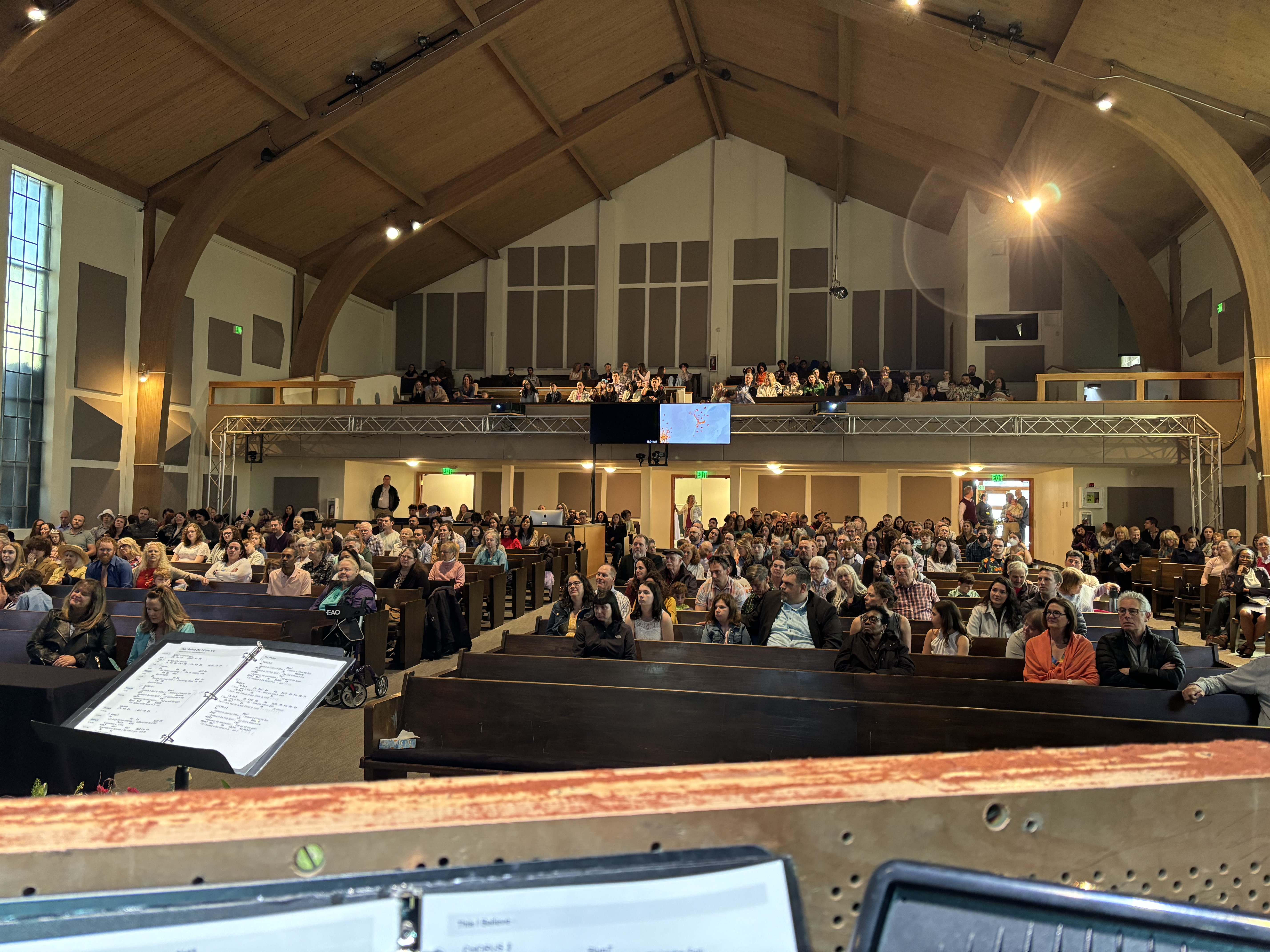
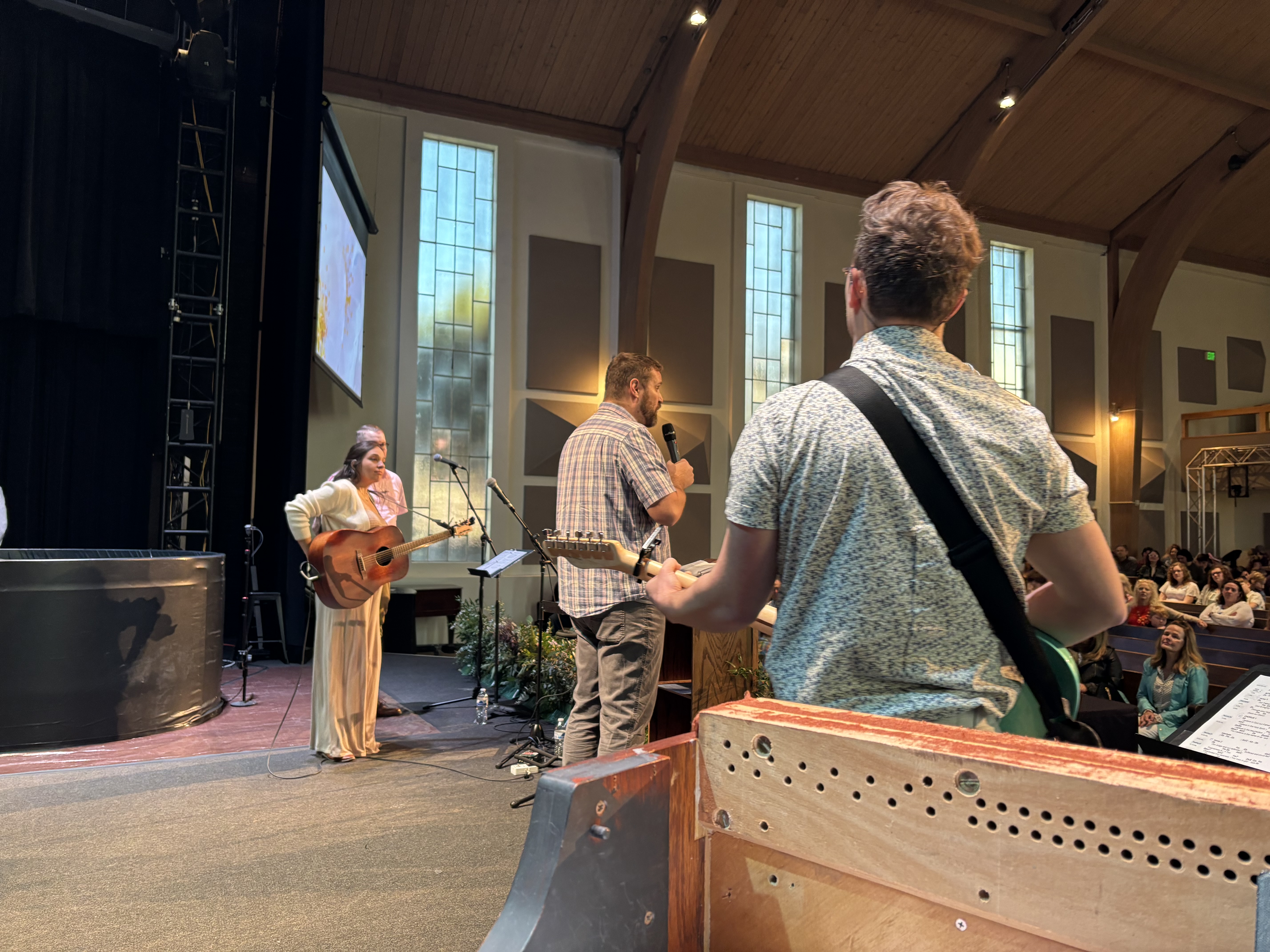
Something hit me on Easter Sunday, involving family and some other things. I got to play in our Easter worship band, something I love doing and didn’t think I would have the capacity for this year, but thanks to Mom’s friend, I did. Many people just opened their arms and welcomed me back. Some shared the load by hugging me, feeling some of the pain with me. Some asked where I’ve been. The tears started coming when one of my pastors came up to the piano, put his arm around my shoulder and asked, “Would it help if I do a Costco run for you? I can even bring it to Issaquah.” Until that point, I had seen our church family as mainly ones who can support Greg, because he’s closer to them than I am, and he’s single parenting and working and overwhelmed daily. That simple ask helped me see how isolated I have felt in Issaquah, and how I didn’t need to be isolated. I can still ask for help. Another sweet friend offered to drive up just to visit sometime with her new baby. I was reminded that day that I’m not alone. I’m not forgotten. There are people who want to help take care of me, too.

My highlight of the day came while playing one of the songs in our set. We were a group of people, gathered together, many worshiping Jesus, and in that moment, I felt this awareness of being with family. It was a glimpse into the eternal. It was a moment where the curtain was drawn back, and I saw a preview of what’s to come. I saw that this is what we’re waiting for. Some day, the entire family of God will be together, spanning time and nation, praising Jesus. No more will we be distracted or weighed down by other things. No more will we suffer. In particular, no more will we think marriage, sex, relationships, family, career, accomplishments, image, money, or anything else is ultimate. No more will our hearts play this tug-of-war. What we rehearsed on Sunday was a small picture of the reality coming. It hit me hard.

You see, while I love my family dearly, they’re only temporary. They’re not the real deal. They’re a picture of what God’s family is and will be. While I love marriage and sex, they’re also temporary. They’re a picture of the real deal, the relationship between Jesus and his church. While I love relationships, people aren’t the ones whose approval I need most. I could keep going, but perhaps that’s redundant. Tim Keller says that one of the things suffering does is reveal our idols. If we’re responsive to the fire, I believe suffering can be the tool which burns them away. This is one of the kindnesses I’ve seen in my current fire. God has shown me that nothing I have and could cling to will give me total satisfaction. He’s shown me that nothing is “safe”. Husband, kids, house, job, situation, relationships, church, health, mental clarity, anything, could be gone in an instant. Like Job experienced, it could be here one day and gone the next. The LORD gives, and the LORD takes away. We entered with nothing, we leave with nothing. All these things are gifts, but not the ultimate gift. Is my heart’s desire truly Jesus? Is it really him I want, more than what he can give me? If God strips away everything but I still have him, is that enough for me?

That’s how suffering reveals our heart’s deepest desires. I’ve seen ways I have wanted other things more than God. I’ve wanted comfort. I’ve wanted certain people in my life. I’ve wanted stability. All more than I’ve wanted God himself. And thanks to suffering, I see that now. I didn’t before, when things were “going well”. Now this pain brings me face to face with the stark reality that all these things, while lovely in their place, can never satisfy my soul, and were never meant to. They are the gift, not the Giver. And it’s God’s kindness to me to point that out, even when it hurts like hell. Because when I worship these other things, it keeps me from the very best. I only need to remember how many things we do for our children as their parents are for the kids’ good, yet it feels terrible at the moment to the child, who doesn’t and can’t understand. We’re like that, too.

So with God’s help, I will enjoy my family as long as I have them, but worship the Giver of my family. Not because he gave me my family, but because he is worthy of it. And whenever he sees fit to take these temporary blessings away, I will grieve deeply, and hopefully be able to say what Job did. “The LORD gives, and the LORD takes away. Blessed be the name of the LORD.”

The last thing I want to say about that moment in our worship set was the impression God gave me of family. The family of God is where it’s happening. We need to love and pour into our earthly families, absolutely. Yet getting together with the family of God reminded me that they are it. Brothers & sisters, mothers and fathers, aunts and uncles, nieces and nephews. They’re all there! They are the permanent, forever family. Without detracting from the biological one, those in God’s family gets to start living like it now. Loving each other, treating each other as family, and supporting each other the way Jesus has done for us. Sometimes we Christians can miss it in either direction: ignoring the family at home or placing them above all others. As I err on the side of idolizing them, I’m learning that just like everything else, my husband & kids are a gift to enjoy, and I must hold them open-handed.

Sunday at church I was walking up to take communion, and the tears came. Unplanned, unexpected. They just come when they come. My friend Kim was serving, and I managed to tell her that this was the first time I had been able to take communion in awhile, and I didn’t realize until that moment how much I had missed it, and how I would miss it as I’m preparing to go back to Mom. She hugged me while I cried, and cried with me. I miss walking up to take communion with my family, even if it’s people I have never met, rehearsing that Jesus’ body was broken and blood was shed on our behalf so we could become part of God’s family. There’s a kinship, something eternally deep we share in that moment, and it’s very powerful. Today changed communion for me, deepened it in a way comfortable living has not.

I miss my sisters and brothers, my mothers and fathers, the sweet little children. I miss my family. I couldn’t do this apart from you all holding me up. Thank you for loving us and helping us.

So here is my family picture from Easter Sunday.

Why Did Jesus Weep?

In a few of my spare moments, I’ve been watching “Jonathan and Jesus” on Amazon prime. It follows Jonathan Roumie, the actor who plays Jesus on The Chosen. It is quite an enlightening glimpse into his world and how portraying Jesus affects him. In one of the episodes, a friend of his addresses one story in Jesus’ life that will be part of The Chosen, but hadn’t been filmed yet. He asks Jonathan, “When Jesus was about to raise Lazarus from the dead, why did Jesus weep?”

His friend was referencing John 11, verse 35. Shortest verse in the Bible. Jesus’ friend, Lazarus, was sick. His sisters, also Jesus’ friends, had sent for him, asking Jesus to come heal him. Instead of rushing to his aid, Jesus stayed where he was two more days. Then he came. In the interim, Lazarus had died and was placed in a tomb. He had been entombed for four days. Decay had set in (as his sister, Mary, tried to remind Jesus when Jesus told them to take away the stone: “Lord, there will be an odor.”) If you read the whole chapter, you see Jesus’ intention in all of it. He intentionally waited to come until Lazarus had been dead and decaying in his grave. He intentionally came back to a dangerous area, where people were seeking to arrest him. He has these intentional conversations with Lazarus’ sisters, Mary and Martha. It is very evident that Jesus is on a mission, and Jesus’ mission is the glory of God (11:40).

So why did Jesus weep? As you read the narrative, you see that Jesus is deeply troubled, moved in his spirit, as he sees the people weeping for Lazarus. There are many sermons on this section of Scripture, and I don’t mean to write another one or summarize the various perspectives on what it means that Jesus was deeply moved and troubled. I appreciate Jonathan Roumie’s answer to his friend’s question. Surprisingly to me, his friend’s question bothered me. It hit me differently than it has before. His friend was honestly asking, “So, if Jesus knew he was going to fix it, if Jesus knew that he was about to raise Lazarus from the dead and everything would be okay, why did he weep? Why not respond to all the friends and family weeping over the loss of Lazarus with something like, ‘Hey man, it’ll be okay. I’m here now. It’s all good,’ or some other reassuring statement more fitted to 1st century Jewish culture?”

His question bothered me because it represents something very pervasive in Christian culture today. Something I’ve been told, directly or indirectly from so many sources that it’s hard to pinpoint. Something I’ve believed for years and am now unlearning. It feels like it’s the air we Christians breathe, and since it’s air, we don’t often take the time to analyze it. We just breathe it and go on. But this valley God plunged me into with my mom’s cancer and intense suffering has given me new eyes. I don’t see things the way I used to. I’m still figuring out this new vision, and as I am, this pervasive belief in Christian culture says something like this: “When grief or tragedy or death or devastation strike, sure, it’s okay to cry, but not too much. You should be rejoicing. You should be celebrating, because Jesus wins at the end of it all. Jesus resurrects. Jesus is victorious! Too much expression of grief or sorrow isn’t okay, because it shows a weak faith.”

I hear the honest inquiry: “Why did Jesus weep?” Why did he weep, when he was going to make it all right again? Why on earth would Jesus grieve when there was a massive victory over death as Lazarus rose from the dead, and celebration minutes away? I also hear the implied message from my experience: Why cry when you know Jesus will make it better? Why weep since we know the end of the story?

Well, if we strictly look at this passage in John, we see that our perfect Savior wept profusely when he knew the end of the story. Reading some commentaries leaves me understanding that the word “wept” roughly translates “to burst into tears”, also implying strong anger. Francis Schaeffer says in The God Who Was There,

“Let us go to the tomb of Lazarus. As Jesus stood there, He not only wept, but He was angry. The exegesis of the Greek of the passages of John 11:33 and 38 is clear. Jesus, standing in front of the tomb of Lazarus, was angry at death and at the abnormality of the world—the destruction and distress caused by sin.

There are many other instances of weeping and lamenting in the Bible. I learned from Dark Waters, Deep Mercy by Mark Vroegop that 1/3 of the psalms (Israel’s songbook) are songs of lament. Compare that to what you hear on mainstream Christian radio or your worship service. Do you hear at least 1 out of every 3 songs crying out to God in utter honesty about personal pain, injustice, wondering where he is and why he isn’t acting, asking him to move and deliver? Then rehearsing who he is, even when you don’t feel it? Or sometimes, just ending with a complaint? Those songs from Israel were meant to train God’s people up. We need modeling on how to rejoice, celebrate, worship, lament, and grieve. The Psalms do it all. We tend to do it in part.

I’m learning that lamenting is Christ-like. I’m learning that strong emotions, particularly the grievous ones, are part of living like Jesus lived. I’m learning that we Christians have room to grow in becoming more like Jesus in how we grieve. I never saw that before or understood it until God threw me in the deep end of suffering. There is a lot to unlearn, and a lot to learn for the first time. For example, the “air I breathed” growing up taught me nothing about grieving. So when I was faced with it, I was at a loss. What should I do? I thought my strong feelings of anger and sadness were wrong. I thought that I should somehow be able to feel happy, and wondered what was wrong with me that I couldn’t. I couldn’t force myself to believe the platitudes that come my way. I felt very out of place with deep sorrow, because I couldn’t find many other people or examples of how to walk through it.

The trouble is when we don’t know how to lament, we don’t know how to deal with our pain. And as Jesus demonstrated, living in a sinful world means you will encounter deep pain. You will have the need to grieve. Jesus did. If we don’t learn how to lament, we stunt ourselves and the next generation. We miss part of growing into the image of God. We affect our witness to the watching world who is wondering how we Christians deal with the undeserved pain of simply being alive, and the unfairness of suffering (meaning the suffering we have not brought upon ourselves, but the suffering that exists because the world is broken). A friend of mine who knows this suffering world well, and has helped me begin learning how to lament, mentioned to me, “I think people can learn this without being thrown in the deep end. I think it’s possible.” I hope so. Many days into my mom’s cancer journey, I wish I had taken the time to humble myself and acknowledge that I had no idea how to suffer well, how to grieve, and how to lament. Granted, I remember grappling with this question of suffering since my early 20s, and reading Tim Keller’s Walking With God Through Pain and Suffering as I saw others in my life being hit with incredibly painful seasons, and wanting to help. Perhaps experience really is the best teacher. I don’t know.

Many of us simply want to be comfortable. That was my story, and sometimes still is. We worship the idol that keeps us feeling as great as we possibly can. Why disrupt it with learning how to grieve and lament when we don’t have to? Seems like a waste of time and energy.

It is a waste, if this life is all we have. If we’re living for us, for now, in the moment, why on earth put yourself through any more trouble or pain than you must? But if the Bible is true, if Jesus really was and is who he says he was and is, we need to pause and take a good look at him: the Suffering Servant. We need to learn what to do when tragedy strikes. We need to learn what Romans 8 tells Jesus’ followers to do: suffer with him in order that we may also be glorified with him. Feel our deep pain, bring it to the One who gets it, who suffered on our behalf, so we may also share in his glory. I believe that those who have tasted the deepest bitterness of this life are the ones who will rejoice in glory the most with Jesus in the next one. And those of us who may have believed in Jesus but worshiped comfort and sought to distract or numb ourselves from the suffering of being alive, will find ourselves with him but wishing we had done the good work of entering our suffering fully with Jesus. Often we hear we should love like Jesus. I agree. We also need to lament like Jesus.

I had never thought of my suffering as a kindness of God to me. Now I am beginning to see his kindness to me in my pain. Our human brains have a hard time comprehending this: a God who could stop the horrific season, but does not, in order to bring about something so much greater than we could ever have imagined. The cross being the primary example of God doing this (Jesus’ example of praying in the garden yet another gorgeously painful picture of how to lament). He wounds so that he may heal (Hosea 6:1).

We don’t understand. We may not understand the all-difficult question we ask in our pain of “Why?”. We don’t have to understand. Tim Keller flushes this out beautifully in Walking with God (mentioned above). Christianity is the only belief system I know of where the leader suffered at utmost cost to himself to save humanity and all of creation. If anyone gets it, he does. Now I’m going to tell a few things to myself, that I need to remember and you’re welcome to listen in!

Jesus gets your pain. He gets the grief. He won’t be overwhelmed by your anger, your fear, your questions, your doubts, your gut-wrenching weeping. No, indeed. He welcomes it. He counts your tears. He weeps with you. And one day, you’ll get to share in a greater joy that won’t even compare to the worst of sleepless nights and a wet pillow here. One day all those tears will be gone. So cry them now. Otherwise, what will he wipe away?

Caregiving lessons

I have another short window of time to process, and I left my journal at home. Thank you, online blog.

We’re in Swedish Issaquah. We left the apartment at 1:30 for a consult with her oncologists about the swelling. A few hours later we were sent directly to the ER. A few hours after that, Mom was admitted for observation and more consulting. It’s our second night, and thankfully Mom has a few moments of reprieve from sleep. My job here has shifted, as the nurses are taking over meds and feedings; however, they don’t know Mom as well as I do, so I’m offering my input as needed, helping more with the comfort side of things, and being her voice and advocate to help her get what she needs. By the way, good-ish news: we’re probably heading home tomorrow with antibiotics. The experts believe the swelling is related to radiation, and she will be able to continue treatment. One more dose of chemo, and a few more weeks of radiation, and the treatment phase will be over.

As we catalogue this journey, however long it is and wherever we end up, I want to remember a few things. Over the last four months, I’ve learned so much from this caregiving role. More to come, I’m sure. I watch Mom suffer every day. Some more than others. ICU post-surgery and this season of nausea, exhaustion, secretions & swelling from treatment have been the worst so far. I see her go through all this pain, and I’m very aware that while I can imagine what it must feel like, I don’t know. It looks awful. It looks unbearable. I hear from her how she feels. In some ways I can help (grind up another anti-nausea and shoot it in the PEG tube). In some ways I can’t. It is one of the most helpless feelings in the world.

One lesson I’ve learned is that I can’t be both a daughter and a caregiver. Of course I am both, but I can’t act as both. When you wear both hats, at this level of caregiving, you don’t have the capacity to be both. I could either be a daughter or a caregiver. So I am the caregiver, and at times, I get the privilege of experiencing that I’m a daughter to my mom. But those moments are rare these days. So as I see Mom suffer, and I have no ability to alleviate it, as a caregiver, I ache. Somewhere in there, as a daughter, I know there is deep grief that my mom has advanced cancer and is suffering in physical and emotional ways. I know it. Sometimes it has burst out of me. More often than not, though, since the physical burden is so high, I barely have time or space to feel that grief. It’s not time yet. I’m still on the battlefield. The caregiver role is a consuming one. I remember feeling strong fear and anxiety about learning to do in-line suctioning on my own mother. What if she starts choking and I won’t be able to clear it? What if she dies on my watch? Those were some of my spoken fears before January. Fast forward to now, there have been multiple times Mom has been choking on her secretions, and I’ve pulled out my catheter and gone in there and cleared her with no anxiety whatsoever. Calm and cool. Go figure. Didn’t see that one coming. And my support group has been marvelous about addressing my second fear of Mom dying on my watch. If she goes, she goes, whenever God takes her. And if it’s on my watch, it will be an honor to walk her to Jesus.

That leads me to another lesson. My job is not the outcome. My job is faithfulness. My job is to hold the line. My job is to fulfill this role as a caregiver as long as God gives it to me. My job is to do the best I can with my mom, just as I would with anything else I’ve been given. As long as I am doing that, I leave the outcome in God’s hands. I don’t have to fret about when and what. That’s not my problem field. If I’ve been faithful, I’ve succeeded, whatever the outcome is. Doing this season well does not mean my mom is healed from cancer. It will not be my fault if she isn’t, and it won’t be due to me if she is. Yes, I know I keep her fed and medicated, and I’m being used to care for her. I know quality care makes a difference. But it does not make the outcome. The cancer is out of my hands. Her final day, whenever that is, is out of my hands. It’s a very relieving and peaceful thought to rehearse.

One thing I did not expect was how integrally tied to Mom I am. I knew she would need me (or someone else in this role) during surgery, treatment, and recovery. Neither of us understood the extent to which she would need help. The doctors were pretty vague, as I’m sure most patients are different in their recoveries and responses to treatment, anyway. When I see her struggle with nausea, or cough until she vomits, sleep upright in a recliner, struggle seeing her own reflection in the mirror, being told what to do by 15 different health care professionals and feeling overwhelmed by it all, be voiceless, give up eating and tasting all foods (except that certain anti-nausea drug that tastes like burned rubber), live with a trache and the ongoing secretions, feel a heavy “2nd chin”, endure radiation treatments (I could go on, but you get the idea)……..I think nothing can be as hard as what she’s going through. I think how amazingly strong she is. I see how God must be holding her up, because I would have collapsed a long time ago.

Then this last week, I noticed something else. She and I are both suffering, but in very different ways. It’s hard to compare them. In fact, it’s best we don’t compare them. Placing your suffering next to someone else’s is not helpful to either party. Yet I was doing so. I was looking at hers, and minimizing mine because hers seems so drastic, so monumental. This week, it’s as if something started unfolding in me, blooming like those gorgeous spring blossoms I see on the trees on the way to treatment. I saw that I’m suffering, too, and it’s drastic in its own unique way. And comparing mine to Mom’s was dismissing my own cross God is giving me to bear. It wasn’t helping me bear it. I was fighting my feelings, fighting my struggles, trying to dismiss them because Mom’s were more important. And as you can imagine, in doing so, the struggle and the pain kept building and building, and I was becoming more robotic as a person, trying to function and breaking down. But this week, as I started realizing my suffering is valid, I began naming it and acknowledging it. I began crying more. Usually at night, one of the more quiet times of my day when I am alone. Crying about missing my family. About how much I took for granted. About the intensity of the season not letting up. About my disappointments and losses. About my fears. About the distress of watching Mom in so much pain. About wanting someone to take care of me. I’m still in process, but feel a lot more free as I give myself space to suffer while helping my suffering mother. And strange as it feels, acknowledging it helps me be a better caregiver to her.

Practically, I need to remember that if/when Mom goes through cancer recovery, I will also need my own caregiver recovery time. I’m saying this so I remember to actually plan it. Knowing me, this could easily drop down on the priority list.

One of our social workers says that the caregiver is the harder role out of the two. She says it’s partially because we are awake for all of it, and we are often helpless to lift the burden from our suffering person. I can’t say I agree yet (it’s comparing them again!), but it helps me understand why I’m feeling the way I do. Why an anxiety attack sometimes feels like it’s just around the corner, or why I have no energy to handle a simple conversation. Instead of saying one is harder than the other, I prefer to see it as two sides of the same coin. The person with cancer and the caregiver are both suffering. In very distinct, different ways. They each need help and support. That help and support will be individualized for each person. Two sides of the same coin.

In one disparate way, Mom and I are complete opposites. If someone gets trained in (and it’s a good amount of training!), they can take my place. I can have a day off. Mom can’t. Not one of us can take her place for a day. I can’t step in and bear her pain for her while she walks away, trach free and regains the ability to eat. It’s one of the things I wish I could do the most. I have discovered, though, there is a greater comfort I have when I mourn that I can’t give her a day away. Someone did step in her place for her. Someone did bear her pain. Someone is holding her up who gets it like none of us ever truly will. And she knows him. And one day, because of his suffering, the voiceless will have a voice again, and the tongue-less will have a tongue. And she will eat again, and feast, and rejoice, and these days will be far, far gone. It’s not a wistful, “wouldn’t that be nice”, comforting platitude that sounds great but has no weight. It’s a sure promise. Book of Revelation promise. I cannot WAIT to feast with my mom one day. I’m already dreaming up the menu, as I prepare her syringe full of nutrition. Just imagine.*

*I have to insert here: me remembering and rehearsing this truth does not mean this is what we need texted to us or thrown at us from afar. We’ve been met with more religious platitudes this week in the midst of one of the more difficult seasons, and they’ve been extremely unhelpful. Like I’ve written about before, well-intended and so unhelpful. It feels like they’re coming from a place where the person couldn’t hold the grief & pain we are in, and to help themselves feel better, quoted truths to us about God. I had no energy to address this in the moments, so I nodded and let them pass. What I wish I had had the energy to say is, “We agree theologically with you about those truths, but they are so disconnected from where we are! Empathy was completely missing, and when that happens, the platitudes cause pain, not comfort. Learn to grieve with us first. That offers so much more comfort than “God is good” statements.” And as always, thank you to our friends, to the ones who grieve with us and encourage us from a place of empathy and understanding. Your words are so needed and so helpful. I continue to pray for each of you.

A Day In The Life

To remember what this season was like, here’s a typical day out of my week during treatment. This was yesterday (Thursday, 3/21). I’m currently living with Mom in her Issaquah apartment; Greg is living in our home in Des Moines, and the kids are going back and forth between us. I have them Wed-Sat pm, and he has them the rest of the time. All feedings, meds and liquids are via PEG tube.

Wake up at 7:30am. Hear Mom coughing and suctioning in the night, but she didn’t ring for me, so I got to stay in bed all night. Help the kids with breakfast. Prepare Mom’s 8am feeding & meds. 8a-8:20 feeding. Apply facial creams to her radiation site to help heal the burning. Teach Jonathan how to handwash breakfast dishes. 9am – eat breakfast. Suction Mom’s trach. Dump out water & secretions from machine and wash canister. Get dressed. 9:30a – prepare to go for a walk, but nutritionist calls to talk about possible change to her diet. Talk with nutritionist for 30 minutes, find out why insurance won’t cover a healthier, natural formula. Figure out next steps. 10a – prepare 10am meds and water and feed Mom. Write down that you need to schedule her follow-up with Dr. Kim. Text Keith to see when he’s coming over for trach care today. Read Titus a few stories. Prepare the kids for their time while I’m gone at radiation and hydration. Suction Mom again. 11am – find out there is more paperwork to fax to long-term care insurance. Fill it out. Try to figure out the scanner. Mom helps. Scan the documents and fax them through. Faxes fail. Resend. Fail again. Resend once more. Faxes go through. Call the home care company you’re trying to work with. Talk with the care coordinator and schedule a few appointments for next week. Good news: there is a caregiver who can be delegated to handle trach, peg and meds! Will need to onboard her next week. Suction Mom again. Lots of secretions. Help Jonathan and Caleb make copies for math. 11:45a – prepare the 12pm feeding and pack the suction equipment, creams, gloves, water, cups, syringes, cloths, meds for 12:30 departure. Pack a few snacks and water for me. Running out of time for a shower. Push it to tomorrow.

12pm – Feed and meds for Mom. Last instructions for kids. Keith comes, picks up the trach supplies while we gather everything else. 12:35p – Leave for the hospital. Walk across the street with Mom and Keith. Check in for 1pm hydration appointment. Once settled, I ask Keith if he can hang with Mom while I go for a walk. He covers me for 45 minutes – I walk around the hospital and get some cardio and fresh air. Come back, find Keith and Mom finished with trach care and coloring. I join them; 2 minutes later Mom gets another coughing fit, needs suction, fanning, peppermint oil to help her calm down. Return to coloring. 3pm – Keith leaves.

3:15pm – done with hydration. Pack up and walk directly over to radiation. Mom changes, suctions, and gets called back quickly. I wait. Texting Grace’s ride to ballet and Grace to give her instructions on where to go if I’m not back before she leaves. 10 minutes later, Mom comes back and is done. We pack up, say goodbye to the front desk team, and walk back to the apartment. Home by 4pm. Just miss Grace, but she gets picked up safely for ballet.

4pm – say hello to kids, prepare 4pm meds and feeding. Feed and meds for Mom. Radiation cream round 2. 4:45, figure out shopping list and dinner. 5pm – Greg comes and picks up Jonathan for baseball practice. I suction Mom, take Caleb and Titus to grocery store for dinner. I get there, realize I left my wallet at home, and come back. Scrounge for dinner fairly successfully, put shopping off until tomorrow. 5:45pm – feed Mom. Take boys down to pool, let them swim for an hour or so. 7:30pm – come back upstairs, get boys ready for bed, read stories. Put them to bed. 8:30pm – meds for Mom. 9pm – do dishes. 9:30p – put on radiation cream once more. Prepare 10pm meds. 10pm – meds for Mom. Suction. Prepare syringes for the next day. Write down the next day’s schedule. 10:30pm – get ready for bed. 11pm – go to bed.

4am Friday – get called by Mom because she’s choking on mucus. More suction. Head back to bed. Keep hearing her coughing, but no calling for me. On and off sleep until I wake up at 8:30, realize I’m 30 minutes late for the first feeding of the day. Oh well. Adjust schedule and move on.

This is a pretty average day. No day is the same. There have been worse; there have been better. The highlights were coloring with Keith and Mom, and taking a walk. Low lights are the choking episodes and hearing Mom struggle to sleep during those coughing fits, knowing I can’t help.

Now it’s 10pm Friday and I need to prepare her final meds. Until next time.

Phase…..I’ve lost count

Disclaimer: this is a personal processing, cancer care update, journal-type entry. Ways we need help is at the end of the post, if you’d rather skip to the practical needs section 🙂 I take no offense. Writing helps me process, and I’ve not done as much as I probably should have lately.

I’m counting 11/20/23 as the start of this cancer journey, though it was in the works for years previous with issues Mom was experiencing with her tongue. 11/20 is when we got the diagnosis after a few months of more urgently seeking out answers for the increasingly problematic symptoms. 11/20 is when we realized we were dealing with cancer, and our lives have changed. Now we’re in our 4th month. I don’t know what phase to call this next one, but I’m realizing we’re turning another corner. After diagnosis came treatment options and questions. Then came prep for surgery. Then came surgery, ICU, and hospital recovery. Then came discharge and recovery at home. Then came radiation and chemo consults. Then came chemo treatment. Then came moving Mom back to Issaquah. Then radiation treatment. That brings us to the next stage.

I’ve had a good session of respite this week, thanks to Jason flying in from Alaska and his willingness to learn PEG tube feedings and general help and care. Also due to my brother learning trach care so I don’t have to drive to Issaquah every day. A deep breath and chance to recover. I’ve gotten time with my kiddos. Greg and I even got in a date, thanks to Mom gifting us some tickets she couldn’t use. Played in our worship band for the first time in a few months, and said hello to some wonderful people. Greg is giving me this afternoon off, so the breath continues a little longer before this next phase starts up tomorrow.

So…..introducing Phase 9, perhaps? I don’t know. It may not be helpful to give these phases a name or number. I’m learning that suffering doesn’t turn off and on, or have a clean beginning and ending. It is something you walk through, like life. You can’t plan it. You can’t control it. You have no idea when it will “end”. It may not end, but ebb and flow. It’s a journey. It’s why God says we walk through the valley of the shadow of death. One step at a time. It’s a daily, moment-by-moment existence. So we’re walking. And I see a bend in the road. This bend is care for Mom while she goes through treatment, living in Issaquah.

She’s living there instead of with us for multiple reasons: the main one being that her treatment is across the street from her apartment, and she can walk to appointments. When you have at least 7 appointments/treatments a week, proximity is gold. It’s also nice to know emergency help is within a block. Obviously it’s not ideal (as nothing is). Greg and I live 45 minutes away. Her trach needs daily maintenance. Only two people in her world are trained to do it currently: Keith and me. PEG tube feeding on your own is a full-time job, and Mom has other things she needs to do besides feed herself. Sometimes her mucous is so thick, it gets hard to breathe, and it’s scary to be in that place on your own. While the hope was to have a caregiver with her 4x/week (for the days I can’t be there) for 8 hours/day, LTC insurance will only cover half of what we were hoping for with caregivers for Mom. We can’t afford the out of pocket expense of a caregiver, so we’re looking to see if a shorter shift is both 1. possible and 2. available. Along with that, Issaquah is a hard area to staff, and nurse delegators are short, and not many delegators can do trach maintenance. So the pieces are falling into place, and I’m starting to see what the next few months may look like.

Treatment for Mom ends on April 15. Then she needs time to recover. This may take up to 3-4 months (July/August). We have no idea when her trach will come out. Maybe at the end of treatment, maybe after 3-4 months post-treatment. My current goal is to get her through treatment. Then, if she needs continual trach care, at least she will be done with 7 appointments/week and we can move her back to our house if needed. I was able to live with her for the first week after she moved back to Issaquah because my husband was able to work from home. Now he needs to be back in the office three days a week. It feels as if I need to be in two places at once: with our kids Wed-Fri, and with Mom. For this week, I’ll be with Mom Monday night-Tuesday, Wed-Fri during the day, Fri night – Sun night.

So how to get her (and our family) through treatment? Well, if you read 1 Chronicles 19, you’ll see something that amazingly related very strongly to our current circumstances. God’s people are being wrongfully attacked from all sides. Joab organizes the army into two groups: one led by him and one by Abishai. He tells Abishai, “You go over there and fight that group. I’ll go over here and fight this group. If you get overwhelmed, I’ll come help you. If I get overwhelmed, you come help me. We’ll fight with all our strength for God, his people and his cities. And may the LORD do what seems good to him.”

Greg and I are Joab and Abishai. We’re going to divide our strengths to fight for one of God’s daughters. One with Mom, one with our kids and home. We’re going to do this with all our strength and resources. If one is overwhelmed, the other will come and help. And may the LORD do what seems good to him. The outcome is out of our hands. Reading that encouraged me so much. Joab’s faith is what I want. I’ll go ahead and make battle plans, and keep knocking on doors, and trying to use every resources we have. And at the end of the day, God controls the outcome. That gives me tremendous peace. He’s not a safe God. He doesn’t promise my mom (or I, or my family), will come out of this unscathed, or even alive. He promises us much more than that. He promises that he is with us in the fire. He is with us in the valley. He won’t ever leave. He’s with Mom in every radiation appointment when she’s strapped to a board, in every chemo session when DNA-killing medicine is flowing through her veins. He’s with me in the chaos of each day. He’s with our kids while I can’t be. He also promises this life is the worst it’s going to get for us. Eternal glory in exchange for temporary suffering. I’ll take that any day. He’s not a safe God. But he’s good.

The thing Joab and Abishai had, too, was an army. We’ve had an army helping us from January to now. Meals, rides, groceries, prayer. We still need these things. At first I thought we just needed help for January. Then I thought, well, maybe February as well. Then March came and I’m realizing we still need help. It’s humbling to admit that. It’s humbling to be in need for so long. I can only imagine how Mom feels. Yet we still need our army. Perhaps some of you need to retreat and gain strength. Perhaps some of you are new troops fresh for a battle. I know God will send us what we need. Are you up for joining the army to help us? While so much is still unclear, and I tend to live day-by-day now, or sometimes week-to-week, here are a few things Greg and I could use until May:

  • Daily prayer. Talk about daily manna. I get it now. I can’t do one day on my own.
  • Magdsick home help on Wed-Fri during the day. I may need to be with Mom, and we need someone at home with our kids while Greg is at work. Another option I’m considering is bringing them with me to Mom’s Wed-Fri, though there are complications to work on that end, as traipsing into Swedish Oncology with four children for radiation treatment isn’t helpful to anyone!
  • Rides for Grace to and from ballet on Tuesdays & Thursdays from 4:15-8:45p window, for 5:45-8:15p class, starting 3/26. This takes a load off Greg and lets him be home with the boys on those weeknights, giving them a decent bedtime hour.
  • We still have grocery help (thank you!!! You know who you are!)
  • Anyone in the Issaquah area (or willing to drive there) who is willing to learn how to maintain Mom’s trach and/or do PEG tube feedings.
  • Financial support is always welcome to cover the extra cost of gas & take-out.
  • There are probably other things we need I am not aware of or have just forgotten. If you see anything or have other ways to help, yes please!

So here we go, making plans, fighting with all our strength, knowing things will most likely change and we’ll need to shift and be flexible and make new plans. And may the LORD do what seems good to him.

Sword Thrusts or Healing?

To my church family:

First of all, I want to thank those of you who have been Jesus’ hands and feet to me, my family, and my mom while we journey through her cancer diagnosis and treatment. You’ve brought meals. You’ve donated funds. You’ve given rides to our kids. You’ve come over and been an adult with them while they do school. You’ve taken on our grocery runs. You’ve prayed. You’ve met me at the hospital. I know we’re far from done, but thank you for your presence and help thus far.

It’s a horrible existence. Feels very hell-ish. A roller coaster. We’re facing death head-on. Fear, grief, anguish, deep darkness, numbness, intense pain, exhaustion, anger: they’re all there and all part of our daily life. The emotional/mental side combined with the physical side makes this season tremendously difficult. I keep trying to put it into words. Probably partly to express it so I may process it, and partly to help others understand.

I want to help others understand, because, sadly, some of my church family has been hurtful and insensitive. I say this with all the grace Jesus has given me, because I know their intentions are good. I know those who have hurt me have been trying to help. I know this because I have also been that person. Many times. In my ignorance, in my thoughtlessness, in my immaturity, I have said and done things (or failed to say or do things) to grieving, suffering, hurting people which have added to their burden instead of sharing it. I can see and hear the loving intention, too, in the midst of them hurting me, and I need to continue to forgive and extend grace. I don’t want to end there, however. With this blog post, I also want to extend some loving truth to help others improve in bearing burdens. This is something I wish I sought out years ago. I need to grow in loving grieving people, and learning how to bear their burdens, and I want to help others grow in burden-bearing.

My experience isn’t unique. As I’ve tentatively shared my pain with others, I’ve been met with multiple people who have gone through the same thing. One angel God sent me in the ICU had also been there previously with a family member in dire circumstances. As we were talking about “miserable comforters”, she laughingly observed, “Christians were the worst comforters” (just so you know, she and I are both Christians). One of her most painful moments was when someone asked her if she’s prayed about her painful situation, implying it must be painful because she hasn’t prayed about it yet, or perhaps she hadn’t prayed properly. Another friend said that the silence of people in her world hurt the most. A horribly painful one is asking if my mom has any unconfessed sin in her life, causing this cancer to spread. If you’ve ever read Job, perhaps you can recognize some patterns of what Job calls “miserable comforters”. The messages implied are, “it’s your fault”, or “I don’t care”. There are also ways our pain is minimized. “God is with you, so don’t be so sad.” “God is using this for good.” “Remember Jesus.” All true things, but so unhelpful and unfitting. Unfitting because these truths, given to me in a dark place, act as an attempt to prematurely pull me out of processing my pain and grief. Look through the Psalms and you’ll see plenty of grief and questioning. Those truths are things I might need to hear, but you won’t know unless you’ve listened to me and know where I am for more than just a few minutes. As Proverbs 12:18 says,

“There is one whose rash words are like sword thrusts, but the tongue of the wise brings healing.”

Those are the more obviously hurtful statements, or sword thrusts. Not surprisingly, there are also some subtler ones. It’s getting pretty easy to forgive and laugh at the obvious ones. It’s harder for me to deal with the subtle ones. Perhaps because there are much more of them. It’s one of the reasons I don’t want to come back to church. It’s not possible for me to go yet, anyway, but to be fully honest, I’m dreading it. I feel out of place. I feel unsafe. I feel additionally burdened when I go. I don’t doubt anyone’s intentions, but there are sword thrusts waiting for me, nonetheless. And since my current burden is so heavy, I don’t have much left to deal with additional burdens and pokes. On Sundays, I would so much rather come and be present and meet with God, and if possible, be supported by his people. I still want to come meet with God, but I’m struggling with his people, because instead of support, I feel additionally burdened by many sweet, wonderful, well-meaning people.

I’m going to share some of the subtle sword thrusts, and then share some things which have been healing to me.

Some subtle sword thrusts:

  • Other people’s cancer stories. While this may seem like you’re trying to relate to me, in reality it distracts and takes away from our personal journey through cancer. As my mom said, though there are always similarities in cancer stories, every person’s journey through it is unique. Hearing about yours is an added burden at the time. I know you mean it to be encouraging, but it seems to make it about you, and I don’t have the capacity for that. It’s human nature to relate, but please understand it’s very unhelpful and adds to the already heavy burden I’m carrying.
  • Telling me what worked for you in your hard season. Again, this relates to the previous point. You’re taking away from my personal journey and making it about you. You and I are completely different people. If we’re only talking on a Sunday morning, chances are we don’t know each other well at all. You don’t know my story, and I don’t know yours. What worked for you may not at all work for me, because we are unique individuals with unique stories. Perhaps there is a time to hear what worked for you, but now is not the time. Now I need a listening ear, or silent, empathetic presence. I need people who can pray for me, because I often don’t have the strength to pray. However, there is an exception to this. When this is offered from a trusted person who has listened, been present, acknowledged the difficulty, empathized with me, and knows me, this is very welcome. A family friend modeled this for me in letter form, sending me exactly what I needed to hear. It was from a place of seeking to help, from being present, listening and empathizing with me, and it was God-given encouragement. When given more randomly, from someone I don’t know well, it’s well-intended and burdensome.
  • Asking questions about how I am doing or how Mom is doing. I’m glad you want to know how I am. If our relationship isn’t super close and we mainly interact on Sunday mornings, however, these questions add to my burden. Usually there are usually 10-15 people asking me the same thing in a very short time period. If I could walk into church, sit and be present just as I am, with tears running down my face, sitting down for worship because I don’t have the strength to stand, knowing I’m free not to sing because I don’t have the strength to, then I’d be fine. Sadly, that’s not been my experience yet. One Sunday there was a line of people waiting to see me and talk with me. While I appreciate that you care, and I could tell you did, answering how I am multiple times over to people who are not deeply invested in my life and grief adds to my burden. The deeply invested people are the ones who will be supporting me through this season. They’re the ones who have already been with me through hard seasons, through the ups and downs of life. They’re the ones who will ask me how I’m doing because they are already caring and supporting me.
  • Giving advice. Copy and paste what I said above, but put in “giving advice” in place of “asking questions”. Usually my Sunday morning line-ups were mixed with both questions and well-meaning advice. Both of which tired me out immensely, and weren’t useful. As I write this, I’m reminded of something I read in “The Road Back to You” by Ian Morgan Cron and Suzanne Stabile. They write about the Enneagram, a tool used to help understand the various types of people in our world and how we think, process, operate well and poorly, etc. It was in the chapter about Fours (which I am). One of the strengths of a Four is that they are empathetic. On page 161, the author states, “Fours instinctively know how to honor and bear witness to the pain of others. They know there’s nothing they can do to help other than be in solidarity with you until whatever afflictive emotion you’re experiencing has finished its work in you. So when your dog needs to be put to sleep and you can’t bear the idea of going to the vet alone, don’t call a Two. They’ll show up with a casserole and a new puppy. Fours will drive you to the vet’s, stand alongside you and help hold the dog during those final moments, and give you nothing other than the ministry of their presence.” With that said, what I’ve been realizing is that many people with their strengths and weaknesses have been seeking to help us. We need help in many ways. If we only had casseroles, we’d be missing the emotional support. If we only had Fours coming over to cry with us and listen to us, we’d be starving and really dirty. In my current experience, church family seems to be really heavy on the casserole side, and really light on the “weep with those who weep” side. I don’t expect everyone to have the strength of a Four. However, we desperately need to grow as a church to learn how to better bear each other’s burdens and make a way for grieving, suffering people.
  • Ignoring me. I have had people who I thought would be there, but have been silent. No texts, no words, no calls, no meals, nothing. Perhaps they react on social media to a post or a picture, but that’s it. Even hearing, “I don’t have any capacity to help, but please know I’m thinking of you” is better than silence. Or, “I don’t know what to say”, is a great thing to say. Doing or saying nothing is an additional sword thrust.

It’s not been all burdensome, though. Below are the few ways I’ve been helped emotionally by church family. Words and actions of healing. If these were more common, I would feel much more comfortable coming to church while I’m hurting.

Healing words & actions:

  • Letting me walk into church without asking me any questions. Perhaps if we are not really close, leaving me alone on Sunday and helping in practical ways like meals or rides would be the best way you could support me.
  • Telling me you’re praying for me. This doesn’t ask anything of me, but gives me something.
  • Actually praying for me (please ask first!). And be sensitive. If there’s a line of people surrounding me, know that I’m most likely overwhelmed and wanting to escape. Stop and pray about whether to approach me. Ask God to search your heart. Are you approaching me because He’s leading you to, or are you seeking to do it for yourself? Satisfy curiosity? Make yourself feel better that you’re doing something? If so, that’s not what I need.
  • Reading my mom’s caringbridge website if you are interested in how she is doing instead of asking me or Greg. Imagine needing to answer, “How is your mom doing?” 20 times before leaving the church building. Another friend of mine simply stopped going to church because she was continually asked about a traumatic event in her life, and reliving it multiple times in a morning was too much. If you read my mom’s updates, then you can say, “I read _________ and I’m praying for ___________.” This doesn’t ask anything from me and lets me know you care. https://www.caringbridge.org/visit/laurieshealthjourney2
  • Listening. God wasn’t kidding when he said to be slow to speak and quick to listen. Some may assume this means asking me lots of questions, but you probably understand that I don’t mean that! Those who are already invested in my life have given me this space, and are listening to me. One friend in particular comes to mind who is out of state. She doesn’t ask anything of me, understands I’ll call when I can, and she listens without loading me up with advice. This takes strength. This requires taking on discomfort or pain on yourself. She doesn’t load me up with platitudes to relieve herself from that discomfort. She just bears it. That lifts a load off me.
  • Empathy. This first requires listening (See my bullet point above). Putting yourself in my shoes and feeling some of my pain. Some wonderful people have done this for me. I have no idea what their belief system is, but they’ve been such a gift. One such person was my neighbor I happened to meet on a walk. She had lost her mother, and knew a friend with a similar cancer, and that knowledge and experience somehow didn’t lead into advice or questions, but empathy. She told me she knew how hard this season was. She cried. She hugged me. She said to reach out if I needed anything. The sweet dog she was walking actually gave me a hug from the back while she hugged me from the front. Hugely healing.
  • Asking nothing of me. Reaching out to Greg if you have additional questions about how to help.
  • Don’t expect me to respond to texts, phone calls or emails. Since I’m full to the brim, my spare time is usually spent sleeping, resting, eating, showering, or other life basics. I appreciate hearing from you, and I appreciate that you know I’ll reply when I can. Understanding that about me helps tremendously.
  • Read some books about grief if you want to learn more. I’m currently walking through “Dark Waters, Deep Mercy” by Mark Vroegop. Greg recommends “Someone I Know is Grieving” by Ed Welch. In order to become a person who grieves with others well, it means doing a good amount of personal work.

We Christians can be miserable comforters. We can also grow to become wonderful, empathetic comforters. Don’t take it as any condemnation if you’re terrible at it. I certainly was. Yet by God’s grace, he’s making me more like him. In this season, he’s taking me through a crash course on grieving with my mom. The real trouble is if we self-protect, if we ignore, if we resist him, if we are prideful and don’t see any need for change or growth in us. Then that’s cause for concern.

If you are terribly brave, ask people who know you, particularly people who are suffering or have suffered, what has helped them in their pain, and what has made it worse. Listen. Be open to God pointing out where you are weak and need to grow. And please, for the sake of the gospel, and for the sake of hurting people, please seek to learn how to grieve well and bear each other’s burdens well.

Of course, I am speaking to my own experience. It’s very likely this isn’t every grieving person’s story. It’s only one. However, enough stories have come my way that makes me think I’m not alone. I have a feeling many hurting people would come out of the woodwork and come to know Jesus through his church if we grew in empathy. I have a feeling there are more hurting people who haven’t felt comfortable in church or welcome to come as they are. Not because they lack faith in God, but because sometimes his people bring sword thrusts instead of healing. Or sometimes, because there isn’t space made for them. I firmly believe Jesus loves his church. I’m not going to leave because I’ve gotten hurt. Family doesn’t do that. Family sticks it out through the pain and insensitivity. Family gives grace to one another and seeks to build each other up. I’m going to stick with my family and go the more difficult and more rewarding route, and try to be part of the growth. Jesus said, “Come to me, all who are weary and heavy-laden, and I will give you rest.” I hope and pray the church becomes more and more of a place where the heavy-laden can experience God’s rest through his people.

If Mom’s health allows, I hope to see my church family in March. If I sneak in and sneak out, you’ll know why 🙂

Day 8

We’re on Day 8 of home care for Mom after discharge from the hospital. Things have settled into somewhat of a routine. One of the things I’ve realized in this season of surgery recovery is that most of my time and energy as caregiver are devoted to keeping Mom’s meds, feedings, and wound care on schedule, and communicating with the various members of her care team (surgery, PT, OT, to name a few). I have very little time to process any feelings of my own. When people ask how I’m doing, the most honest answer I have right now is “I don’t know.” And if I do try to start figuring out how I am, it feels like opening the door to a floodgate of feelings that don’t have names yet, and I don’t have the energy to feel them and name them.

Mom needs food, water, or meds around the clock currently: 1am, 7am, 10am, 11:30am, 1pm, 3:30pm, 7pm, and 9pm. She’s working on building up her strength post-hospital stay in order to be able to shower, dress, walk safely, and eventually feed herself through her PEG tube. It reminds me of the time in ICU: the changes seem very small and unremarkable, then before you know it, you’re out of ICU and on the regular floor talking about discharge. Time appears to move slowly and more quickly.

We have a mother-in-law apartment in our home, which is where Mom and I are living currently until she’s able to be self-sufficient. It’s one of the reasons we bought the house we did: we wanted it to be a place where we could house people who needed it, mother and mother-in-law in mind. Obviously we didn’t realize when this would happen or that we would need it so soon. I was imagining empty teenage rooms and sweet, gray-haired women who needed their children to care for them. Instead it’s my youthful, 63-year-old mother who gets mistaken as my sister (obviously I don’t age as well as she does!), because cancer is attacking her. While this isn’t how I pictured it, this is what Greg and I wanted to do. And thanks to God and all the people helping, we’re doing it.

There are a few moments I’m able to get away and do some self-care. As so many people have told me: taking care of myself is taking care of Mom. I go for walks in our neighborhood for exercise, I take showers, I sleep when I can, and yesterday I got to connect with Greg for a few minutes. The kids come down and say hello every so often, have a movie night with Grandma or play card games. Greg brings me my meals and comes down often to wash syringes and cups for me (I go through many of those each day). We’ve had multiple people offering their time to come hang out with our kids during their homeschool hours during the mornings, along with meals, rides for Grace to and from ballet, housecleaning, volunteer caregivers to give me breaks, grocery shoppers, and probably so many other things I’m forgetting. Thank you from the bottom of my heart.

After Mom recovers from surgery, it sounds like her oncologist is recommending chemo and radiation. So this season right now is temporary. I’m learning to be grateful for every minute I get with her, and working on the guilty feelings I have when I leave her or take time for myself. My cancer caregiver support group has been a tremendous help already. They live in this world which I have trouble describing, and the freedom to be honest with others who get it is a gift. It’s also scary. Today in group, we were talking about the “cave of death”, looking at what many of us and our person are facing. This really is a valley of death. One member who came on today just lost his wife. Another has a spouse who has terminal brain cancer and knows the end is coming at some point, just don’t know when. Others have people in treatment or in remission. I’m the new kid on the block, as Mom got diagnosed so recently compared with others who have been here for years.

While scary to face the possibility you never want to see happen, we also talked about how weirdly helpful it is. Being able to know death isn’t the end. Suffering doesn’t get the last word. I read Habakkuk this morning, and wow, did it ever speak to me. Especially 3:16. I don’t have time to get into it (I think I wrote a whole post in my journal on Habakkuk), but this part is what God spoke to me.

I hear, and my body trembles;
    my lips quiver at the sound;
rottenness enters into my bones;
    my legs tremble beneath me.
Yet I will quietly wait for the day of trouble
    to come upon people who invade us.

From that I heard I’m in good company with the prophet. It’s okay that my body trembles when I see my mom suffer. It’s okay that my lips quiver when I think that she might never get to see her grandchildren grow up. It’s okay that rottenness enters my bones when I watch cancer ravage her body. It’s okay that my legs tremble beneath me when I wonder how I can do another day. Yet. Yet, one day cancer will be irradicated. Yet, one day, my mom’s body will be fully renewed. Yet, one day, Jesus will come and will finally cast out all sin and sickness and death and struggle, and the glory waiting for us isn’t worth comparing to the suffering we’re going through. Habakkuk was told that the righteous will live by faith. That point, “yet”, is where my faith comes into play. It takes faith to go through the valley, believing the valley isn’t the end. Habakkuk needed to watch an evil people come ravage the Israelites. And in the previous verses, God told Habakkuk that this valley of his wasn’t the end. The Chaldeans would eventually see God’s judgment for their evil. Would God take away the evil day coming for his people? No. Yet the valley isn’t the end. Habakkuk put his faith in God while experiencing the gap suffering creates between who God says he is and the evil we experience. We see his faith in action as he says he will wait quietly for the day when the most awful wrongs will be made right. The book ends with this song:

Though the fig tree should not blossom,
    nor fruit be on the vines,
the produce of the olive fail
    and the fields yield no food,
the flock be cut off from the fold
    and there be no herd in the stalls,
 yet I will rejoice in the Lord;
    I will take joy in the God of my salvation.
 God, the Lord, is my strength;
    he makes my feet like the deer’s;
    he makes me tread on my high places.

To the choirmaster: with stringed[d] instruments.

God the Lord is my strength in this valley. God the Lord will give me what I need. And because he is my shepherd, I shall not want. Even if my worst nightmares come true. Even if my mom dies a horrible, painful death. It won’t be the end. Death doesn’t have the final say, because Jesus conquered death. My mom’s life is tied to his. Since he rose, she will. That’s our final hope. And this is worth repeating: having this hope does not take away the pain of the valley. Jesus didn’t cry out on the cross as he experienced the intense pain of death by torture and separation from God: “I can do all things through Christ who strengthens me!” Or “God is for me!” Or “Hallelujah!”. He cried out a psalm of lament, Psalm 22. In his suffering, he cried out why. “My God, my God, why have you forsaken me?” Don’t take that away from us grieving people. Let us grieve like our Savior did. Let us cry out while we bear our cross. It doesn’t mean we don’t believe in our final hope of resurrection life. It means we’re grieving. And our suffering Savior is so near to those in the valley.

On The Edge

And so we begin. On the edge of two seasons: almost done waiting and almost ready for surgery. I’ve handed off and prepared everything I could in order to be fully present with Mom through the next phase of surgery and recovery. I’m humbled and grateful for the dozens of people who have picked up various parts in order to support our family so I’m free to do this, and for the community supporting Mom.

There are further seasons to this cancer journey, but I can’t see past the one step ahead of me. The ironic thing is that we often fool ourselves into thinking we can indeed see many steps ahead, yet we can’t. Nothing is guaranteed. I have a new understanding that I don’t know what tomorrow holds. But I do know the One who holds all things together. So I may wail, but I won’t despair. I may be struck down, but I’m not destroyed. I may be sorrowful, and I will hopefully learn to rejoice. As Christians, our bodies hold the death and life of Jesus simultaneously. It seems counterintuitive, or flat out impossible at first, but it matches where we are in God’s story. Sealed with the Holy Spirit, yet waiting for final salvation from God’s wrath. Adopted, yet waiting for the arrival to our new home. Made fully, positionally righteous, yet struggle with sin daily, waiting for our righteousness to be made perfect. Seeing in a mirror dimly now, and one day seeing fully.

My strong emotions don’t mean I don’t trust God. They mean I do. I trust him enough to feel them and to bring them to him. I used to live very shut off from my feelings. God has continually called me out of that numbness because it was self-protecting, and in so doing, self-harming. I was living as if I knew best, and distancing myself from God, thinking how terrible he was at protecting me from pain. Yet I was keeping myself from the very One I needed most in my pain. You see, I didn’t realize the truth of being a Christian that Jesus reminded us of often in Scripture. You need to take up your cross and follow him (Luke 14). Provided we suffer with him in order that we might be glorified with him (Romans 8). Through many tribulations we will enter the kingdom of God (Acts 14).

There are moments I feel God’s word to be true. And there are moments His promises feel very hollow, as a friend so aptly put it. If my faith were based on my feelings, I’d have stopped believing in Jesus a long time ago. No, he’s the anchor when my feelings toss me around. I need God himself, and I need a God who is great, wise, powerful, just, good, steadfast, loving, and holy, to name a few, more than me or any other human or created thing is able to be.

I’m in a storm, and I’m going to cry out. Jesus isn’t asking me to just grit my teeth and bear it. He isn’t asking me to recite Bible verses about how good he is. He isn’t asking me to put a smile on and fake it til I make it. If he’s really God, Creator of the Universe, Savior of all who trust in him, dead and risen again, Lord of everything, holding the universe together with the word of his power, King of kings and God of gods, and if he really is near to the brokenhearted and saves the crushed in spirit, if he really is for me and has engraved my name on the palm of his hands, if he really will walk with me through the fire and flood, then I will be brokenhearted. Then I will be crushed in spirit. Then I will enter the fire and flood. Then I will cry out. Let’s see if he really is, and really will. I’ll keep you posted.